Table of Contents
- What Is Jet Engine Repair and Maintenance?
- Engine Induction and Initial Inspection Processes
- Disassembly, Cleaning, and Component Refurbishment
- Overhaul vs. Repair: Making the Right Decision
- Engine Shop Visit Duration and FAA Part 145 Repair Station Requirements
- Predictive Maintenance in Aviation: Modern Engine Health Monitoring
- Routine Maintenance Intervals and Airworthiness Certification
- Troubleshooting Common Jet Engine Issues
Last Updated: July 10, 2026
What Is Jet Engine Repair and Maintenance?
Jet engine repair and maintenance ensures aircraft remain airworthy, compliant, and safe through a comprehensive, regulated process combining mechanical expertise, advanced diagnostics, and rigorous documentation. According to FAA regulations on aircraft maintenance, every commercial and business jet engine must undergo scheduled maintenance, inspections, and repairs following strict manufacturer specifications and regulatory guidelines.
The process involves inspection and assessment, disassembly, component cleaning and refurbishment, non-destructive testing, reassembly, and final certification testing. Each step prevents catastrophic failures, extends engine life, maintains regulatory compliance, and protects crew and passengers.
The Role of MRO in Aviation Safety
Maintenance, Repair, and Overhaul (MRO) services form the backbone of aviation safety. Without rigorous MRO protocols, engines accumulate invisible damage: micro-fractures in turbine blades, creep in high-temperature components, and corrosion in fuel systems. MRO facilities detect and correct these issues before they become safety hazards.
A facility performing thorough non-destructive testing catches defects that visual inspection alone would miss. Service bulletins issued by engine manufacturers communicate critical safety information that must be incorporated into every engine's maintenance record. When an aircraft receives an Airworthiness Directive from the FAA or EASA, MRO technicians ensure compliance before the next flight.
Engine Induction and Initial Inspection Processes
When an engine arrives at a repair station, the first step is thorough documentation and visual assessment, establishing baseline condition and guiding all subsequent decisions about repair scope and cost.
Receiving Inspection and Documentation
The receiving inspection begins before any tools touch the engine. Technicians photograph external condition, document visible damage, corrosion, or leakage, and review the aircraft's maintenance logs. Documentation requirements include the technical logbook, maintenance manual, and service bulletins relevant to that engine model. Technicians verify serial number, production date, and total operating hours, noting any outstanding airworthiness directives. A borescope examination of accessible internal components identifies obvious issues like burnt turbine blades, foreign object damage (FOD), or carbon buildup that might affect repair scope.
Borescope Inspection and Non-Destructive Testing
Borescope inspection is the gateway to understanding engine internals. Modern borescope systems use articulating probes and high-definition imaging to navigate turbine stages, compressor sections, and combustor liners. Non-destructive testing (NDT) goes deeper: ultrasonic inspection detects internal cracks, eddy current testing identifies surface defects in conductive materials, magnetic particle inspection reveals stress fractures in ferrous components, and dye penetrant testing highlights surface-breaking cracks.
| Inspection Method | Detects | Best For | Time Required |
|---|---|---|---|
| Borescope | Visible damage, cracks, FOD | Quick assessment, trending | 30-60 minutes |
| Ultrasonic | Internal cracks, delamination | Compressor blades, discs | 45-90 minutes |
| Eddy Current | Surface/near-surface defects | Turbine blades, fasteners | 60-120 minutes |
| Dye Penetrant | Surface-breaking cracks | Final inspection before assembly | 90-180 minutes |
Disassembly, Cleaning, and Component Refurbishment
Once inspection is complete and overhaul is approved, the engine enters disassembly. A single turbine engine contains thousands of components, each requiring careful removal, cleaning, inspection, and documentation.
Crankcase and Piston Engine Teardown
For piston engines, disassembly begins by removing the engine from the airframe, then systematically taking apart cylinders, pistons, connecting rods, crankshaft, and accessory drives. Each component is inspected for wear, corrosion, and cracks. Pistons are measured for ring gap and clearance. Cylinder walls are examined for scoring or taper. The crankshaft undergoes magnetic particle inspection to detect subsurface stress cracks. Carbon buildup inside cylinders is removed using specialized tools, and oil passages are flushed to remove sludge and contaminants.
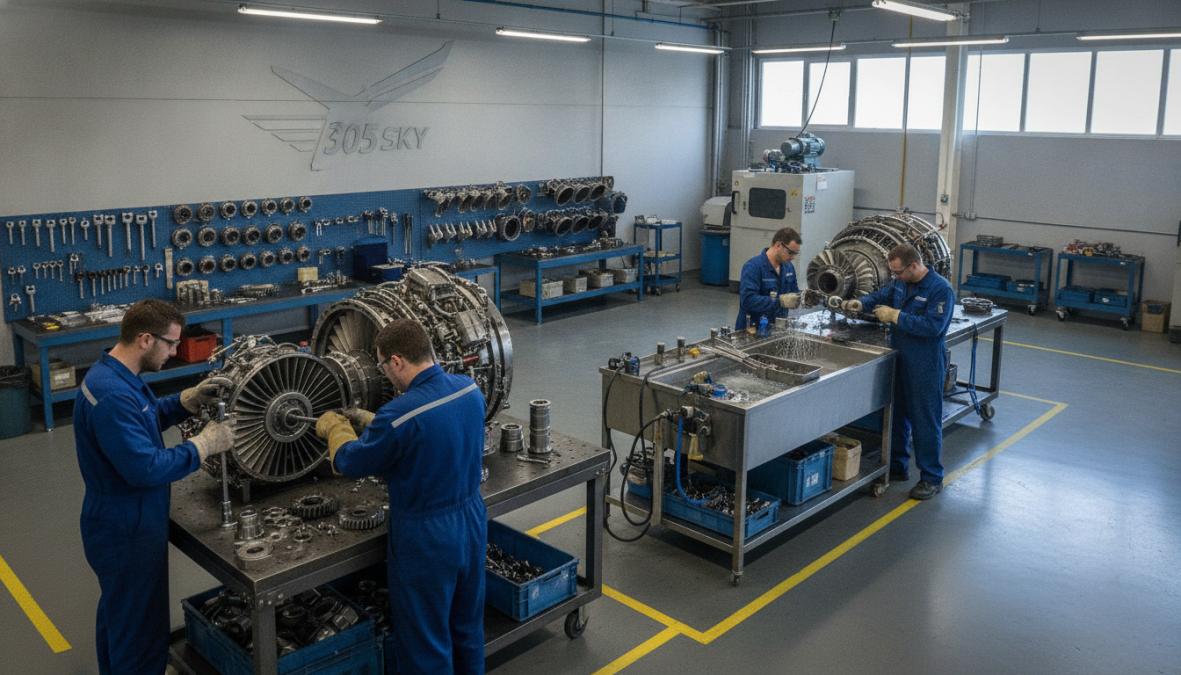
Turbine Engine Core Cleaning and Restoration
Turbine engines require aggressive cleaning because they operate at extreme temperatures and pressures. Chemical cleaning processes dissolve buildup without damaging precision surfaces. Ultrasonic cleaning in specialized solvents removes contamination from internal passages.
Component refurbishment is where skilled technicians add value. A turbine blade showing minor corrosion can be restored through careful polishing and coating. A compressor blade with minor surface damage can be blended smooth. A fuel nozzle clogged with carbon can be chemically cleaned and flow-tested to manufacturer specifications.
Overhaul vs. Repair: Making the Right Decision
Not every engine needs a full overhaul. The decision depends on engine condition, remaining useful life, and economic factors.
Cost-Benefit Analysis of Engine Overhaul vs. Repair
An engine overhaul disassembles the engine completely, inspects and refurbishes every component, replaces all life-limited parts, and reassembles it to like-new condition. A repair addresses specific defects without touching components that don't need attention.
The economic decision hinges on several factors: the engine's current total time and cycles, remaining service life before mandatory overhaul, the cost of the specific repair versus overhaul cost, the engine's residual value after repair versus after overhaul, and the aircraft's expected remaining service life. An engine with 15,000 hours and 5,000 hours remaining before mandatory overhaul might justify a targeted repair. An engine with 19,000 hours and only 1,000 hours remaining likely justifies overhaul.
Engine Life Cycle and Residual Value
Turbine engines have defined life limits measured in flight hours, flight cycles, and calendar years. A typical business jet engine might have a 20,000-hour life limit, 15,000-cycle limit, or 25-year limit, whichever comes first. When an engine reaches any of these limits, it must be overhauled or retired.
Residual value is highest immediately after overhaul. An engine with zero hours since overhaul (0 HSO) commands premium pricing on the used engine market. For operators planning to sell an aircraft, overhaul timing matters significantly.
Engine Shop Visit Duration and FAA Part 145 Repair Station Requirements
The timeline for engine shop visit duration varies dramatically based on scope. A simple repair might take weeks. A full overhaul might take months.
Typical Turnaround Times and Scheduling
A straightforward repair, replacing a fuel control or fixing a fuel leak, typically requires 2-4 weeks. An engine overhaul typically ranges from 8-16 weeks, depending on the engine model, complexity, and parts availability. Parts availability is a major variable. If a required component is in stock, turnaround accelerates. If a part must be ordered from the manufacturer, delays extend the timeline. Supply chain logistics can add 2-4 weeks to an overhaul schedule.
Certification and Compliance Standards
Every repair station performing engine work must hold FAA Part 145 certification, or equivalent EASA approval for European operators. This certification confirms that the facility, technicians, and procedures meet regulatory standards for aircraft maintenance.
FAA Part 145 repair stations must maintain detailed records of every maintenance action. Work orders document what was done, by whom, and when. Parts traceability ensures every component installed can be traced to its source. Technicians must hold appropriate airframe and powerplant (A&P) certificates with inspection authorization (IA) for critical work.
Predictive Maintenance in Aviation: Modern Engine Health Monitoring
The future of engine maintenance is predictive, not reactive. Modern operators use real-time data to anticipate maintenance needs and schedule work proactively.
Digital Twin Technology and Trend Analysis
A digital twin is a virtual model of a physical engine, continuously updated with real flight data. Sensors embedded in the engine transmit parameters, fuel flow, turbine temperature, compressor discharge pressure, vibration levels, to ground systems that compare actual performance against the engine's baseline.
When performance trends downward, the system alerts the operator and maintenance team. Fuel consumption increasing by 2% over three months suggests compressor fouling. Turbine inlet temperature creeping upward suggests turbine blade degradation. Vibration levels rising indicate bearing wear. GE Aerospace's OnPoint Services program exemplifies this approach, using Prognostic Health Management (PHM) to monitor engine fleets and predict maintenance requirements weeks or months in advance.
Reducing AOG Events Through Proactive Monitoring
An AOG (Aircraft on Ground) event occurs when an aircraft cannot fly because of a maintenance issue. AOG events are expensive, charter operators lose revenue, scheduled airlines incur penalties, and emergency response is costly. Predictive maintenance dramatically reduces AOG frequency by detecting degradation early and allowing maintenance during planned downtime rather than forcing emergency intervention.
Routine Maintenance Intervals and Airworthiness Certification
Beyond major overhauls, every engine must undergo routine maintenance at scheduled intervals defined by the engine manufacturer and mandated by regulatory authorities.
100-Hour Inspection and Annual Requirements
The 100-hour inspection applies primarily to piston engines in general aviation. After every 100 hours of operation, the engine undergoes comprehensive inspection. Oil and filter are changed. Spark plugs are inspected and replaced if worn. Fuel system components are examined. Engine mounts and vibration dampers are checked for cracks or looseness.
Annual inspections apply to all piston engines, regardless of hours flown. Turbine engines follow manufacturer-specified maintenance checks, typically 400-hour, 1,200-hour, and 3,000-hour intervals.
Service Bulletins and Airworthiness Directives
Service Bulletins (SBs) are manufacturer recommendations for maintenance, modifications, or inspections. Airworthiness Directives (ADs) are mandatory instructions issued by the FAA or EASA requiring specific maintenance actions. Every AD must be complied with by the specified deadline, and compliance must be documented in the aircraft's maintenance records.
| Maintenance Type | Interval | Scope | Documentation |
|---|---|---|---|
| 100-Hour Inspection | 100 flight hours | Piston engines: fluids, spark plugs, systems | Maintenance log entry |
| Annual Inspection | 12 calendar months | All engines: comprehensive inspection | Annual inspection certificate |
| Service Bulletin | As recommended | Component-specific maintenance | Work order, compliance record |
| Airworthiness Directive | As specified | Mandatory corrective action | AD compliance log |
Troubleshooting Common Jet Engine Issues
Engine problems manifest in various ways. Understanding common symptoms and their causes helps operators communicate effectively with maintenance teams.
Engine Performance Degradation and Diagnostics
Engine performance degradation typically shows up as increased fuel consumption, reduced power output, or difficulty starting. Compressor fouling occurs when salt air, dust, or fuel contaminants accumulate on compressor blades, reducing aerodynamic efficiency. The solution is compressor cleaning, either on-wing using specialized procedures, or removing the engine for thorough chemical cleaning.
Turbine blade erosion happens gradually as sand, dust, and salt particles impact blade surfaces. Borescope inspection detects erosion early. If caught before significant material loss, blades can be restored by careful polishing. Advanced erosion requires blade replacement.
Fuel control problems manifest as rough running, difficulty starting, or inability to reach full power. Most repair stations send fuel controls to specialized shops for overhaul.
Supply Chain Logistics and Parts Availability
Engine repair depends on a complex supply chain. Original equipment manufacturer (OEM) parts are produced to exacting specifications but often have long lead times. Aftermarket parts and rotables (components that can be repaired and reused) offer alternatives.
A rotable is a component removed from one engine, refurbished, and installed in another. Common rotables include fuel controls, starters, alternators, and hydraulic pumps. Maintaining an inventory of rotables allows repair stations to minimize downtime. FAA guidance on aircraft parts and supply chain management emphasizes the importance of parts traceability and authenticity. Counterfeit parts are a real problem in aviation maintenance. Reputable repair stations maintain strict supplier controls and documentation to ensure every part installed is genuine and traceable.
Engine maintenance is complex, regulated, and critical to aviation safety. The decision to repair or overhaul, the selection of a qualified repair station, and the investment in predictive maintenance all significantly impact your aircraft's reliability and operational costs. At 305 Sky, our team brings over 55 years of combined aviation experience to every engine maintenance project. We maintain FAA Part 145 certification, operate four strategically located South Florida facilities, and offer transparent, family-oriented service backed by our 3rd generation aviators. Whether you need routine inspections, emergency AOG response, or comprehensive overhaul planning, we deliver expert care with efficiency and honesty. Get a quote from 305 Sky today and experience the difference that dedicated, transparent maintenance support makes for your aircraft operations.
Frequently Asked Questions
What is the difference between jet engine overhaul and repair?
Overhaul involves complete disassembly, inspection, and refurbishment of all engine components to restore the engine to like-new condition, resetting the engine life cycle. Repair addresses specific defects or damage while maintaining the current engine condition. Overhaul is more comprehensive and costly but extends engine life significantly; repair is targeted and less expensive but may not address underlying wear. The choice depends on engine condition, remaining service life, and cost-benefit analysis of your aircraft's operational needs.
How long does a typical engine shop visit take for jet engine repair and maintenance?
Engine shop visit duration varies widely based on maintenance scope. Routine inspections and minor repairs may take 2-4 weeks, while major overhauls can require 6-12 weeks or longer. Factors affecting turnaround include engine type, availability of parts, required NDT inspections, workload at the repair station, and whether additional issues are discovered during disassembly. Complex turbine engines typically require longer than piston engines. Emergency AOG (Aircraft on Ground) situations may expedite service through dedicated mobile response teams.
What are FAA Part 145 repair station requirements for jet engine maintenance?
FAA Part 145 repair stations must maintain certified personnel, approved maintenance manuals, proper facilities, and quality control procedures. They must hold specific ratings for engine types they service (piston, turbine, etc.), maintain detailed technical logbooks, comply with all Airworthiness Directives and Service Bulletins, and perform required inspections and testing. Facilities must pass regular FAA audits and maintain traceability for all parts and work performed. These requirements ensure consistent quality and airworthiness certification across the aviation industry.
How does predictive maintenance in aviation reduce engine downtime?
Predictive maintenance uses engine health monitoring systems and digital twin technology to analyze performance trends before failures occur. By tracking parameters like temperature, pressure, and vibration, technicians can schedule maintenance during planned downtime rather than waiting for emergency failures. This approach reduces AOG (Aircraft on Ground) events, extends engine intervals, and optimizes parts replacement timing. Digital data capture enables trend analysis and identifies wear patterns specific to your fleet, allowing proactive component refurbishment and improving overall aircraft availability and operational efficiency.
What certifications and compliance standards govern jet engine repair?
Jet engine repair must comply with FAA regulations (Part 145 for repair stations, Part 91/135 for operators), EASA standards for European operations, and manufacturer-specific maintenance manuals. Technicians must hold airframe and powerplant (A&P) certificates. All work must be documented in the aircraft's technical logbook, and engines must pass final testing and inspection before returning to service. Compliance ensures airworthiness, safety, and regulatory approval for continued flight operations across jurisdictions.
This article was written using GrandRanker