Table of Contents
- What South Florida Aircraft Maintenance Services Include
- FAA Certified Aircraft Maintenance in Florida: What It Means
- Top South Florida Aircraft Maintenance Providers
- 305 Sky: 24/7 Emergency Response & Transparent Pricing
- Propel Aviation: Textron Authorized Service Center
- Florida Jet: Learjet Specialization at Fort Lauderdale
- Logos Aviation: Multinational MRO with Global Support
- Xtreme Aviation: Heavy Maintenance & Engine Services
- Duncan Aviation Fort Lauderdale: Avionics Specialists
- KFAviation: Embraer Jets & Component Overhaul
- Aircraft Inspection Services Across South Florida
- AOG Aircraft Support in South Florida: 24/7 Emergency Response
- Aircraft Maintenance Cost Structure in Florida
- Regulatory Compliance Checklist for South Florida Operators
- Private vs. Commercial Fleet Maintenance Differences
Last Updated: August 2, 2026
South Florida aircraft maintenance services are critical for any aircraft owner or operator in the region. Whether managing a private jet, charter operation, or corporate fleet, reliable maintenance support prevents costly downtime. At 305 Sky, we've built over 55 years of combined expertise across aircraft care, from 24/7 emergency AOG response to pre-buy inspections. This guide covers what maintenance services include, how to evaluate providers, and what to expect from regulatory compliance to transparent pricing.
The Miami-to-Port St. Lucie corridor hosts sophisticated aircraft maintenance infrastructure. You'll encounter terms like MRO, line maintenance, and heavy checks without clear guidance, and pricing opacity is rampant. Below, we'll show you exactly what to look for in a south florida aircraft maintenance services provider and introduce you to the facilities and specialists who keep your aircraft airworthy and compliant.
What South Florida Aircraft Maintenance Services Include
Aircraft maintenance services span routine line work to complex overhauls.
Line Maintenance vs. Heavy Maintenance
Line maintenance covers quick-turn work between flights: walk-around inspections, fluid servicing, component replacement, and avionics troubleshooting. This work typically takes hours and prevents small problems from becoming major ones.
Heavy maintenance is scheduled, intensive work that grounds the aircraft for extended periods. The FAA mandates A-checks monthly, C-checks every 18-24 months, and D-checks every 6-10 years depending on aircraft type. These inspections involve structural inspection, engine overhauls, and component replacement. A D-check on a large jet can take weeks and cost significantly.
Most operators need both. Line maintenance handles day-to-day support; heavy maintenance addresses scheduled inspections. The best providers offer both capabilities or maintain trusted partnerships.
Emergency AOG Response
Aircraft on Ground (AOG) support handles unexpected failures. A hydraulic leak, electrical failure, or engine anomaly grounds your aircraft unexpectedly. AOG response means a technician arrives within hours with parts and expertise to restore flight capability.
Effective AOG support requires mobile maintenance units, parts inventory, and 24/7 technician availability. South Florida's multiple airports and competing providers make AOG support genuinely accessible. However, not every shop maintains true 24/7 capability, some operate on-call networks that delay response.
FAA Certified Aircraft Maintenance in Florida: What It Means
FAA Part 145 certification assures that a maintenance facility meets federal standards for safety, documentation, and technical competency. When evaluating providers, verify their Part 145 certificate and check which aircraft types and work scopes it covers.
Beyond Part 145, look for additional certifications. Textron Authorized Service Centers have factory-level training for Cessna and Beechcraft aircraft. Bombardier and Embraer maintain similar networks. Factory-trained technicians understand specific aircraft systems better than generalist shops. For specialized work, engine overhauls, propeller repairs, landing gear overhauls, seek OEM (Original Equipment Manufacturer) authorization.
Documentation standards separate professional operations from others. Every maintenance event should generate a detailed work order, parts list, labor hours, and A&P mechanic sign-off. These records become part of your aircraft's permanent logbook and affect resale value. Transparent providers share records promptly and explain what was done and why.
Top South Florida Aircraft Maintenance Providers
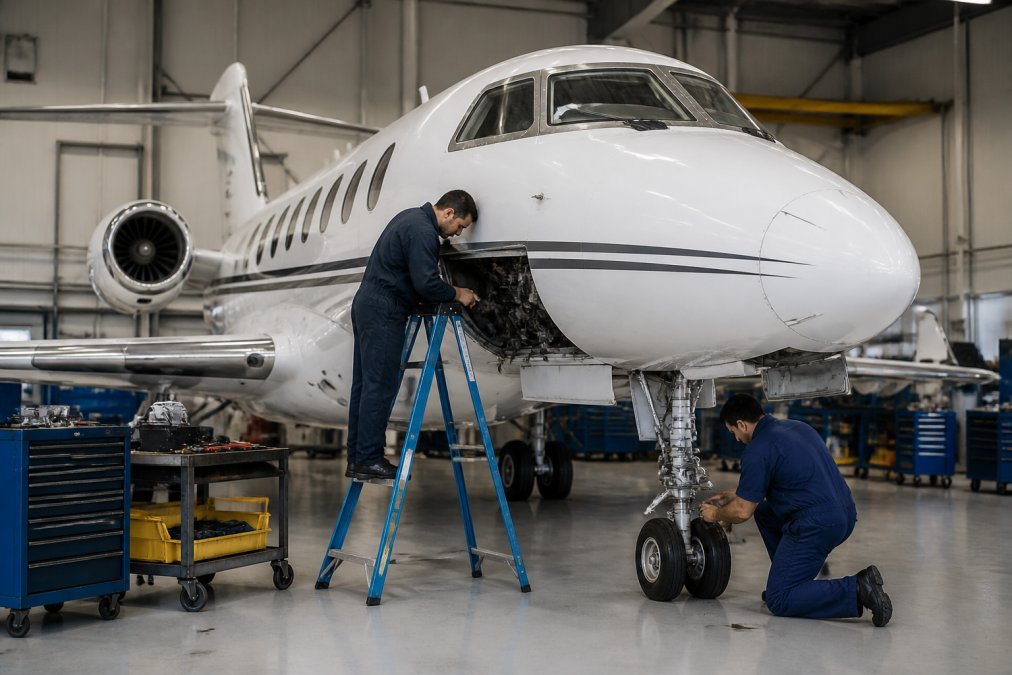
305 Sky: 24/7 Emergency Response & Transparent Pricing
305 Sky operates four strategically located facilities across South Florida with a team boasting over 55 years of combined aviation experience. Their standout differentiator is transparent pricing and 24/7 AOG response with no hidden fees. When you call at 2 AM with a hydraulic leak, a mobile maintenance van arrives equipped to diagnose and repair on-site. 305 Sky handles the full scope: routine inspections, AOG emergency response, avionics upgrades, and cabin transformations. This breadth means you coordinate with one team rather than juggling multiple vendors.
Propel Aviation: Textron Authorized Service Center
Propel Aviation operates out of Miami Executive Airport (KTMB) as an FAA Part 145 certified facility and Textron Authorized Service Center for Cessna and Beechcraft aircraft. Factory-trained technicians and genuine parts availability reduce diagnostic time and improve reliability. Propel services diverse aircraft including Gulfstream, Hawker, Falcon, Learjet, Embraer, and piston-engine aircraft. Over 25 years of operation suggests stability and institutional knowledge.
Florida Jet: Learjet Specialization at Fort Lauderdale
Florida Jet specializes exclusively in Learjet aircraft maintenance at Fort Lauderdale Executive Airport. Over 35 years of Learjet-focused expertise means mechanics understand your specific airframe's quirks and failure modes better than generalist shops.
Logos Aviation, Inc.: Multinational MRO with Global Support
Logos Aviation operates as a multinational MRO facility at Fort Lauderdale Executive Airport, specializing in medium to large jets including Bombardier, Cessna, Dassault Falcon, Gulfstream, and Hawker Beechcraft. They hold maintenance licensing across the US, Europe, South America, Caribbean, and Africa. This global reach matters if you operate internationally or need overseas parts sourcing. 24/7 AOG support and emphasis on customer satisfaction suggest a professional operation.
Xtreme Aviation: Heavy Maintenance & Engine Services
Xtreme Aviation holds FAA certification and operates from Miami/Opa-Locka Executive Airport (OPF). Their focus is heavy maintenance, A, B, C, and D-check inspections, plus line maintenance and engine services. They emphasize precision engineering and VIP-level customer care tailored to individual operators.
Duncan Aviation Fort Lauderdale: Avionics Specialists
Duncan Aviation's Fort Lauderdale satellite focuses on avionics line maintenance, troubleshooting, upgrades, and installations. They offer 24/7 avionics service with mobile capability, including RVSM/91.411-413 inspections, ELT inspections, and pitot-static/transponder inspections. For avionics needs, Duncan Aviation's specialization and mobile capability are valuable.
KFAviation: Embraer Jets & Component Overhaul
KFAviation holds FAA and EASA certifications and operates from Miami. They specialize in Embraer E-Jets, Legacy, and Phenom series aircraft, offering comprehensive maintenance including avionics, airframe, AOG support, and component overhauls. Dual certification is useful if you operate in Europe or maintain international dispatch capability.
| Provider | Specialization | Certification | AOG Capability | Transparency |
|---|---|---|---|---|
| 305 Sky | Full-service (inspections, AOG, avionics, cabin) | FAA Part 145 | 24/7 mobile | High (published pricing) |
| Propel Aviation | Textron authorized; diverse aircraft | FAA Part 145 | Quote-based | Medium (quote required) |
| Florida Jet | Learjet exclusive | FAA Part 145 | Quote-based | Medium (quote required) |
| Logos Aviation | Medium/large jets; multinational | FAA + international | 24/7 AOG | Medium (quote required) |
| Xtreme Aviation | Heavy maintenance & engines | FAA Part 145 | Line + AOG | Medium (quote required) |
| Duncan Aviation | Avionics specialist | FAA Part 145 | 24/7 mobile (avionics) | Medium (quote required) |
| KFAviation | Embraer specialist; components | FAA & EASA | 24/7 AOG | Medium (quote required) |
Aircraft Inspection Services Across South Florida
Inspections are the foundation of aircraft safety and regulatory compliance.
Pre-Buy Inspections for Aircraft Purchases
A pre-buy inspection is your due diligence before signing a purchase agreement. An independent A&P mechanic examines the airframe, engines, avionics, interior, and maintenance records to uncover hidden damage, deferred maintenance, or undisclosed issues. A thorough pre-buy takes 4-8 hours depending on aircraft complexity and generates a detailed report identifying discrepancies, estimated repair costs, and safety concerns. Local shops understand regional environmental stressors (salt corrosion, humidity, intense UV exposure) that affect South Florida aircraft uniquely.
Annual & Scheduled Inspections
Federal regulations require annual inspections (or 100-hour inspections for aircraft used for hire). An A&P mechanic inspects engines, systems, structure, and components against a detailed checklist. Any discrepancies must be corrected before the aircraft can be flown legally. Scheduled maintenance intervals vary by aircraft type. The best providers schedule annuals efficiently and quote costs based on aircraft type and expected scope.
AOG Aircraft Support in South Florida: 24/7 Emergency Response
AOG situations test maintenance providers. Response speed and technical competency determine how quickly you're back in service.
Mobile Maintenance Units & Field Services
The best providers maintain mobile maintenance units equipped with diagnostic tools, replacement parts, and basic repair equipment. A technician can arrive at your location, diagnose the problem, and often complete repairs on-site without ferrying your aircraft to a hangar. This capability is especially valuable for operators at smaller airports or those flying remote routes.
How Fast Response Actually Works
True 24/7 AOG response requires technicians on-call, parts inventory, and dispatch coordination. When you call an AOG emergency, the facility should answer immediately, gather aircraft details, dispatch a technician with estimated arrival time, source parts before arrival, and communicate status updates. Response times vary by location and symptom severity.
Aircraft Maintenance Cost Structure in Florida
Maintenance costs vary based on aircraft type, service scope, and provider overhead.
Transparent Pricing vs. Hidden Fees
The best providers publish labor rates and quote work upfront. A transparent quote specifies labor hours, parts cost, and total estimated expense. If additional work is discovered, the provider communicates the discovery, explains necessity, and gets approval before proceeding. When evaluating providers, ask for written quotes before authorizing work.
Cost Factors: Aircraft Type, Service Scope & Urgency
A Cessna 172 annual costs significantly less than a Gulfstream G650 because the Gulfstream has more complex systems. Service scope drives costs dramatically, an oil change costs hundreds; a complete engine overhaul costs tens of thousands. AOG emergency response includes dispatch fees, after-hours labor premiums, and possible parts markup. The most cost-effective approach is preventative maintenance. Catching a small hydraulic leak during a scheduled inspection costs far less than emergency engine shutdown and AOG response.
Regulatory Compliance Checklist for South Florida Operators
Regulatory compliance is the legal foundation for operating an aircraft.
FAA Part 91 Maintenance Requirements
Part 91 governs general aviation operations. At minimum, you must maintain the aircraft in airworthy condition, complete required inspections (annual or 100-hour), address maintenance issues before flying, keep accurate maintenance records, report major repairs to the FAA, and maintain current airworthiness certificates. Specific equipment requirements depend on your aircraft's certification and intended operations.
South Florida's environment creates specific compliance challenges. Salt corrosion accelerates structural degradation. High humidity promotes corrosion in avionics and electrical systems. Intense UV exposure degrades paint and interior materials. Professional providers account for these stressors when scheduling inspections.
Maintenance Logbook & Documentation Standards
Every maintenance event must be documented in your aircraft's permanent logbook. These records track maintenance history and directly affect resale value. Professional providers generate detailed work orders and logbook entries recording what was inspected, repaired, replaced, labor hours, and technician sign-off. Digital record-keeping systems allow you to access maintenance records anytime and maintain backups.
Private vs. Commercial Fleet Maintenance Differences
Maintenance requirements differ significantly based on how you operate your aircraft.
What Charter & Commercial Operators Need
Commercial operations (charter, cargo, air taxi) fall under Part 135 regulations, requiring more intensive maintenance oversight than Part 91. A Part 135 operator must maintain detailed maintenance records and schedules, conduct more frequent inspections, use only FAA-certified repair stations for major work, maintain reserve funds for unexpected maintenance, and coordinate maintenance with dispatch. Charter operators typically schedule heavy maintenance during slower seasons or coordinate with backup aircraft to maintain dispatch reliability.
Personal Aircraft Owner Requirements
Personal aircraft owners flying under Part 91 have more flexibility. You must maintain your aircraft in airworthy condition and complete required inspections, but you set the maintenance schedule. The smarter approach is planned maintenance. A personal owner working with a trusted maintenance provider develops a maintenance schedule addressing predictable component life and environmental stressors.
How to Choose the Right South Florida Aircraft Maintenance Provider
Selecting a maintenance partner is one of the most important decisions an aircraft operator makes.
Start with credentials. Verify FAA Part 145 certification and check which aircraft types and work scopes the certificate covers. For specialized work, confirm OEM authorizations. Next, evaluate responsiveness and communication. Call and speak with a technician or shop manager. Do they answer questions clearly? Do they provide written quotes before work begins?
Ask for references. Contact other operators who use the provider. How quickly did AOG response arrive? Were bills accurate and transparent? Assess geographic convenience and consider the relationship fit. Do you want a specialized shop or a full-service provider? Match the provider's strengths to your operational needs.
Conclusion
South Florida aircraft maintenance services offer everything from routine inspections to complex heavy overhauls. The region's year-round flying activity, multiple airports, and concentration of business aviation support an impressive range of specialized providers. Whether you operate a personal aircraft, manage a charter fleet, or oversee a corporate aviation department, you have access to FAA-certified repair stations with deep expertise and modern facilities.
The key to successful aircraft ownership is finding a maintenance partner you trust. Transparent pricing, responsive communication, appropriate certifications, and genuine 24/7 AOG capability separate professional operations from those cutting corners. 305 Sky exemplifies this standard, combining over 55 years of combined aviation experience with transparent pricing, mobile maintenance capability, and a family-oriented approach that prioritizes your aircraft's reliability and your peace of mind. Get a quote from 305 Sky today and experience the difference expert, transparent aircraft maintenance makes.
External Sources:
According to FAA regulations for aircraft maintenance and inspection requirements, all aircraft must be maintained in airworthy condition with regular inspections documented in permanent logbooks.
The Aircraft Owners and Pilots Association guidance on maintenance planning emphasizes that preventative maintenance scheduling reduces unexpected failures and emergency repair costs.
Research from General Aviation Manufacturers Association data on maintenance trends shows that operators who prioritize planned maintenance experience significantly fewer unscheduled maintenance events and higher aircraft availability.
Frequently Asked Questions
What does 24/7 AOG support actually mean for aircraft maintenance in South Florida?
24/7 AOG aircraft support means a maintenance provider can respond immediately when your aircraft is grounded unexpectedly, at any hour. This typically includes mobile service units that travel to your location, emergency parts procurement, and direct communication with experienced technicians who can diagnose and repair issues on-site or arrange transport to a facility. Response times vary by provider, but leading South Florida services aim for arrival within hours rather than days.
How do I verify an FAA certified aircraft maintenance facility in Florida?
Check the FAA's official repair station database online, which lists all FAA Part 145 certified facilities by location and certificate number. Verify the specific aircraft type and service category your maintenance provider is authorized to work on. Request copies of their current FAA certificate and ask for references from other aircraft owners. Reputable South Florida maintenance shops display their certifications prominently and are transparent about their authorization scope.
What's the difference between line maintenance and heavy maintenance for aircraft?
Line maintenance covers routine inspections, fluid checks, component replacements, and minor repairs that keep an aircraft airworthy between flights. Heavy maintenance includes major overhauls, structural inspections, and comprehensive system checks that require extended downtime. South Florida maintenance providers typically offer both: line maintenance happens quickly at your hangar, while heavy maintenance requires time in a dedicated facility. Your aircraft type and operational schedule determine which you need most frequently.
What should I look for when choosing a South Florida aircraft maintenance provider?
Prioritize FAA certification, experience with your specific aircraft type, transparent pricing practices, and responsive communication. Verify how quickly they respond to emergency AOG calls, whether they offer mobile services, and if they handle the full scope of your needs (routine maintenance, inspections, avionics, engine work). Ask for references from other operators in your area. A family-oriented, established provider with multiple South Florida locations typically offers better accessibility and faster service than single-location shops.
How much does aircraft maintenance cost in Florida, and what affects pricing?
Aircraft maintenance costs depend heavily on your aircraft type, the scope of service (routine inspection versus engine overhaul), and service urgency. Annual inspections range broadly based on airframe size and complexity. AOG emergency work typically costs more than scheduled maintenance because it requires immediate technician availability. Transparent providers break down labor rates, parts costs, and overhead separately so you understand what you're paying for. Always request a detailed estimate before committing to work.
This article was written using GrandRanker