Table of Contents
- Step 1: Understand Aircraft Mechanic Qualifications and Certifications
- Step 2: Search for FAA Certified Aircraft Mechanics Online
- Step 3: Research Aircraft Repair Shop Recommendations
- Step 4: Vet Mechanics with a Comprehensive Checklist
- Step 5: Conduct a Pre-Purchase Inspection with a Qualified Mechanic
- Common Red Flags When Hiring Aircraft Mechanics
- How to Find Aircraft Mechanics for Ongoing Maintenance
- Conclusion
How to Find Aircraft Mechanics: A Step-by-Step Guide
Last Updated: July 17, 2026
Finding a qualified aircraft mechanic is one of the most critical decisions an aircraft owner makes. This guide walks you through every step of finding, evaluating, and hiring the right aircraft mechanic for your needs, from navigating FAA resources to vetting candidates with a comprehensive checklist.
Step 1: Understand Aircraft Mechanic Qualifications and Certifications
Your first priority is understanding what makes an aircraft mechanic legally qualified to work on your aircraft. The FAA enforces strict certification requirements that protect you and your aircraft.
What Is an A&P Certification?
An Airframe and Powerplant (A&P) mechanic holds FAA certification to perform maintenance, repairs, and inspections on aircraft structures and engines. This baseline credential requires thousands of hours of documented experience, technical training, and passing rigorous FAA exams. Without it, a mechanic cannot legally sign off on repairs or inspections.
An A&P who specializes in Cessnas may lack expertise on complex turbine engines. Experience matters as much as the certification itself. Always verify A&P status directly through the FAA by requesting the mechanic's certificate number and confirming it's current and in good standing.
Inspection Authorization (IA) and Specialized Ratings
Beyond the A&P, some mechanics hold an Inspection Authorization (IA), which allows them to conduct annual inspections and issue airworthiness certificates. An IA-rated mechanic has demonstrated additional expertise and carries greater responsibility.
Specialized ratings matter too. A mechanic holding ratings for your specific aircraft type brings hands-on familiarity that generic A&P mechanics lack. Ask potential mechanics about their specialized certifications. A mechanic who says "I can work on anything" should raise a red flag.
Step 2: Search for FAA Certified Aircraft Mechanics Online
The FAA provides tools to help you locate certified mechanics effectively.
Using the FAA and FSDO Resources
The Flight Standards District Office (FSDO) is the regional FAA office responsible for aviation safety and certification in your region. They maintain records of all certified mechanics and can provide referrals based on your aircraft type and location.
Contact your FSDO directly by phone or visit their office. Be specific: "I'm looking for an A&P mechanic with experience on Piper Cub aircraft in the Miami area." FSDO recommendations carry credibility because they come from the regulatory authority itself.
You can also search the FAA's Airmen Certification Database online, which allows you to verify an individual mechanic's credentials by name or certificate number. This database shows whether a mechanic's certificate is current, suspended, or revoked.
Checking Local FBO and Repair Station Directories
Fixed Base Operators (FBOs) maintain relationships with local mechanics and can recommend trusted professionals. Call your local FBO and ask which A&P mechanics they work with regularly. FBO staff see mechanics in action and know who does quality work.
Certified repair stations employ multiple A&P mechanics and have undergone FAA inspection. If you're comfortable with a facility-based approach, repair stations offer accountability and oversight that independent mechanics may lack.
Step 3: Research Aircraft Repair Shop Recommendations
Your local aviation community is your best source for honest feedback about mechanics and shops.
Consulting Flying Clubs and Aviation Communities
Flying clubs are goldmines for mechanic referrals. Club members discuss maintenance experiences openly and have no financial incentive to recommend bad mechanics. Ask directly: "Who do you trust with your aircraft maintenance?" Listen for names that come up repeatedly.
Online aviation communities, forums, and Facebook groups dedicated to aircraft ownership provide another layer of feedback. Search your aircraft type plus "mechanic" to find discussions. Read through multiple threads to identify mechanics mentioned positively and those with consistent complaints.
Asking Local FBO Staff for Referrals
Visit your FBO in person and ask: "If your family's aircraft needed work, who would you call?" This casual question often elicits more honest answers than formal requests. FBO staff can also tell you which mechanics specialize in your aircraft type and which ones handle emergency AOG (Aircraft on Ground) situations.
Step 4: Vet Mechanics with a Comprehensive Checklist
Once you've identified 2-3 candidates, evaluate them thoroughly to separate qualified professionals from those merely holding a certificate.
Evaluating Experience and Technical Expertise
Ask every candidate: "How many years have you worked on [your aircraft type]?" A mechanic with 20 years on Piper aircraft is more valuable than one with 5 years across all aircraft.
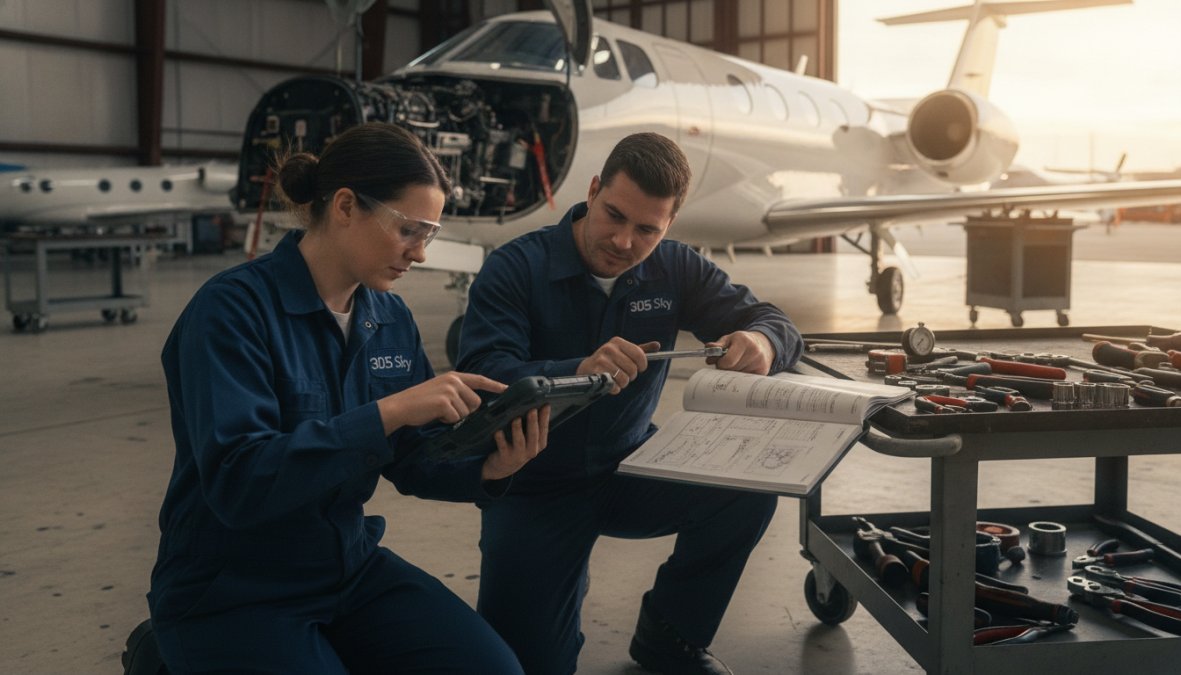
Ask about their specific experience with your aircraft's systems. Request examples of recent work they've completed on similar aircraft. A good mechanic can walk you through a recent annual inspection and explain the decisions they made.
Verifying References and Past Work
Ask for three references from aircraft owners they've worked with recently. When you call, ask: "Did the mechanic finish on time?" "Were costs what they quoted?" "Would you hire them again?"
Request to see logbook entries from recent work. Look for detailed write-ups, clear squawk descriptions, proper signatures and dates, and evidence of thorough inspections. Sloppy logbook entries suggest sloppy maintenance.
Understanding Cost Transparency and Billing Models
Ask directly: "How do you charge for an annual inspection?" "What's your hourly rate?" "Do you provide written estimates before starting work?" Request a written estimate for any major work before they start.
Compare pricing across your candidates, but don't automatically choose the cheapest option. A mechanic charging 20% less than others might be cutting corners. The goal is fair pricing for quality work.
| Evaluation Criteria | What to Look For | Red Flag |
|---|---|---|
| Experience | 10+ years on your aircraft type | "I can work on anything" |
| Certifications | Current A&P and IA ratings verified | Vague about credentials |
| References | Multiple owners recommend enthusiastically | Hesitant or qualified praise |
| Logbook entries | Detailed, clear, professional | Sloppy or incomplete |
| Pricing transparency | Written estimates, clear hourly rates | Vague about costs |
| Communication | Responsive to emails/calls, explains decisions | Defensive or dismissive |
Step 5: Conduct a Pre-Purchase Inspection with a Qualified Mechanic
If you're buying an aircraft, a pre-purchase inspection (PPI) is non-negotiable. This is where you discover hidden problems before you own them.
What to Expect During an Inspection
A thorough pre-purchase inspection takes 8-16 hours depending on the aircraft's age and complexity. The mechanic will examine the airframe, engine, avionics, interior, and all systems. They'll run compression tests, inspect for corrosion and cracks, and verify all systems function properly.
Be present during the inspection and ask questions. After completion, you'll receive a written report detailing the aircraft's condition, any discrepancies found, and estimated repair costs. This report becomes your negotiating tool.
Requesting Documentation and Logbook Review
Request the aircraft's complete logbook history dating back to the original manufacture date. The mechanic should review it thoroughly and note any missing annual inspections, deferred maintenance items, recurring issues, and AD (Airworthiness Directive) compliance.
Ask the mechanic: "Based on the logbook, what maintenance concerns do you have?" Request documentation for any major repairs, engine overhauls, or avionics upgrades. If documentation is missing, that's a red flag.
Common Red Flags When Hiring Aircraft Mechanics
A mechanic who pressures you to make decisions quickly is problematic. Quality work requires time. Unwillingness to provide written estimates is another major red flag.
Defensiveness about credentials suggests insecurity. If you ask to see their A&P certificate and they become irritated, that's concerning. Lack of communication is a chronic problem, if a mechanic doesn't respond to emails or calls within 24 hours, they won't prioritize your aircraft when issues arise.
Be cautious of mechanics who disparage other mechanics without evidence. A pattern of blaming others suggests the mechanic lacks accountability.
How to Find Aircraft Mechanics for Ongoing Maintenance
Finding a mechanic for your first inspection is one challenge. Building a long-term maintenance relationship is another.
Building a Long-Term Maintenance Relationship
Once you've hired a mechanic for initial work, assess the experience carefully. Did they communicate clearly? Did they finish on time? If the experience was positive, stick with that mechanic. Continuity matters in aircraft maintenance.
Schedule your annual inspection well in advance. Give your mechanic 4-6 weeks' notice. Discuss preventative maintenance with your mechanic and ask what inspections or replacements they recommend based on your aircraft's age and usage.
Mobile Mechanics and Emergency AOG Services
Some mechanics operate mobile services, bringing tools and expertise to your aircraft wherever it's located. Mobile mechanics are essential for emergency AOG situations when your aircraft breaks down away from home.
Identify your AOG resource before you need it. Ask your primary mechanic: "If my aircraft breaks down in another city, who would you recommend?" Get contact information for mobile mechanics in areas where you frequently fly.
Conclusion
Finding a qualified aircraft mechanic requires diligence, but it's an investment that pays dividends through safer, more reliable aircraft operation. The process involves understanding certifications, using your aviation community, and conducting thorough vetting before you hire.
If you're based in South Florida or operate frequently in the region, 305 Sky specializes in comprehensive aircraft maintenance with 24/7 AOG emergency response, transparent pricing, and a team with over 55 years of combined aviation experience. Get a quote from 305 Sky and experience maintenance you can trust completely.
Frequently Asked Questions
What qualifications should I look for in an aircraft mechanic?
Look for an FAA-certified A&P (Airframe and Powerplant) mechanic as a baseline requirement. Verify they hold current certifications and check if they have Inspection Authorization (IA) for annual inspections. For specialized work, confirm they have ratings specific to your aircraft type. Always request references and verify their experience with your particular make and model. Ask about their maintenance training history and whether they stay current with aviation safety standards.
How do I verify an aircraft mechanic's FAA certifications?
Contact your local FSDO (Flight Standards District Office) or request the mechanic provide documentation of their A&P license and any additional ratings. Most FAA certified aircraft mechanics should provide copies of their credentials upon request. You can also ask to see their maintenance logbooks and past inspection reports to confirm their technical expertise. Reputable repair stations and FBOs maintain current certifications on file that you can review.
What are red flags when hiring an aircraft mechanic?
Be cautious of mechanics who lack transparent pricing, refuse to provide references, or cannot document their certifications. Avoid those who pressure you to authorize work without detailed estimates or who seem reluctant to explain maintenance findings. Red flags include unwillingness to show old parts, vague billing practices, or lack of proper documentation in your aircraft logbooks. Mechanics who rush inspections or discourage second opinions are also concerning, reputable technicians welcome thorough vetting.
How do I find an aircraft mechanic for a pre-purchase inspection?
Contact local FBOs, flying clubs, and aviation communities for mechanic recommendations specific to your aircraft type. Request mechanics who specialize in pre-purchase inspections and have experience with your aircraft model. Ask potential mechanics about their inspection process, what they examine, and how they document findings. Ensure they provide detailed written reports covering airworthiness, maintenance history review, and any required repairs. Verify they understand Form 8610-2 and proper documentary evidence standards for FAA compliance.
External Sources Referenced
- [EXTERNAL_LINK: FAA Flight Standards District Office Directory | faa.gov]
- [EXTERNAL_LINK: FAA Airmen Certification Database | faa.gov]
- [EXTERNAL_LINK: Aircraft Maintenance and Inspection Requirements | faa.gov]
This article was written using GrandRanker