Table of Contents
- Why Routine Aircraft Inspections Matter: Safety and Airworthiness
- Types of Aircraft Maintenance Checks: A, B, C, and D Inspections
- FAA Regulatory Requirements and Compliance Standards
- Preventing Mechanical Failures and Unplanned Downtime
- The Role of Certified Aircraft Mechanics in Inspection Quality
- Digital Transformation: Modern Tools and Diagnostic Technology
- Cost-Effectiveness and Asset Value: The Financial Case for Routine Inspections
- Sustainability and Environmental Compliance Through Proper Maintenance
Routine Aircraft Inspections: Why They Matter Most
Last Updated: July 16, 2026
Understanding the importance of routine aircraft inspections is fundamental to aviation safety. At 305 Sky, we've spent over 55 years helping aircraft owners recognize that preventive maintenance is the foundation of every safe flight. Aircraft that undergo consistent, scheduled inspections experience significantly fewer mechanical failures, extended service life, and reduced operational costs compared to those relying on reactive maintenance.
This guide covers why routine aircraft inspections matter, what types exist, how regulatory frameworks mandate them, and the financial case for staying ahead of maintenance schedules.
Why Routine Aircraft Inspections Matter: Safety and Airworthiness
Flight safety rests on one principle: aircraft airworthiness depends on knowing the condition of every critical system before it fails. Mechanical failures develop invisibly, cracks in airframes, engine wear, and hydraulic seal degradation accumulate gradually. Without scheduled inspections, these problems remain hidden until they become catastrophic. An inspection program catches developing issues while they're manageable, before they ground your aircraft or compromise safety.
Types of Aircraft Maintenance Checks: A, B, C, and D Inspections
Aircraft maintenance checks follow a standardized hierarchy defined by scope, depth, and time intervals.
A Checks occur every 400-600 flight hours or annually and focus on systems status, fluid levels, filter conditions, and basic functional tests. B Checks occur every 4-6 years or 2,000+ flight hours and expand to include detailed component inspections and lubrication of moving parts. C Checks occur every 4-10 years or 4,000+ flight hours and involve removing panels, conducting detailed structural inspections for corrosion or cracks, and testing critical systems in detail, often requiring 40-80 hours of labor. D Checks (heavy maintenance or overhaul inspections) occur every 6-10 years or 10,000+ flight hours and involve essentially taking the aircraft apart, removing engines, and inspecting every structural component, requiring hundreds of labor hours.
| Inspection Type | Typical Interval | Scope | Typical Duration |
|---|---|---|---|
| A Check | 400-600 hours or annually | Systems, fluids, basic tests | 4-8 hours |
| B Check | 2,000+ hours or 4-6 years | Component inspection, lubrication | 20-40 hours |
| C Check | 4,000+ hours or 4-10 years | Detailed structural inspection | 40-80 hours |
| D Check | 10,000+ hours or 6-10 years | Complete overhaul, engine removal | 200-400+ hours |
Understanding Inspection Intervals and Schedules
Inspection intervals are based on manufacturer testing, fleet data, and regulatory analysis of when components typically show wear. Your aircraft's maintenance manual specifies exact intervals; these are binding regulatory requirements, not suggestions. Deferred maintenance, pushing inspections past their scheduled dates, creates cumulative risk.
Tracking intervals requires consistent logbook discipline. Every flight hour, maintenance event, and inspection completion must be documented.
FAA Regulatory Requirements and Compliance Standards
The FAA mandates routine aircraft inspections through Title 14 CFR Part 91 (general operating rules) and Part 135 (commercial operations). For general aviation, Part 91 requires either an annual inspection or participation in a progressive inspection program. Commercial operators face more stringent requirements under Part 135, including 100-hour inspections and continuous airworthiness maintenance programs (CAMP).
Logbook Documentation and Record Keeping
Your aircraft logbook is the legal record of maintenance history. Every inspection, repair, and component replacement must be documented with the date, mechanic's name and certificate number, what was inspected or repaired, and the condition found. Documentation proves regulatory compliance during audits, creates a historical record for future mechanics, and provides evidence of diligent maintenance if an accident investigation occurs.
Preventing Mechanical Failures and Unplanned Downtime
Mechanical failures create both safety risks and operational chaos. A clogged fuel filter detected during an A Check costs under $500 and takes two hours. The same filter left unaddressed can cause an in-flight engine failure requiring emergency landing, major engine inspection, and weeks of downtime. Preventive maintenance gives you control over when maintenance happens, which shop performs it, and how much it costs.
Early Detection of Component Wear and Structural Issues
Aircraft components wear in predictable patterns. Early detection means you schedule component replacement during planned maintenance windows, not during emergencies. Structural issues represent the most critical detection priority. Corrosion in aluminum structures, fatigue cracks in attachment points, and delamination in composite structures all develop invisibly. A detailed structural inspection can reveal corrosion affecting a wing skin, allowing controlled repair before structural integrity is compromised. Engine condition monitoring tracks compression ratios, fuel consumption patterns, and oil analysis results to reveal developing problems long before catastrophic failure occurs.
The Role of Certified Aircraft Mechanics in Inspection Quality
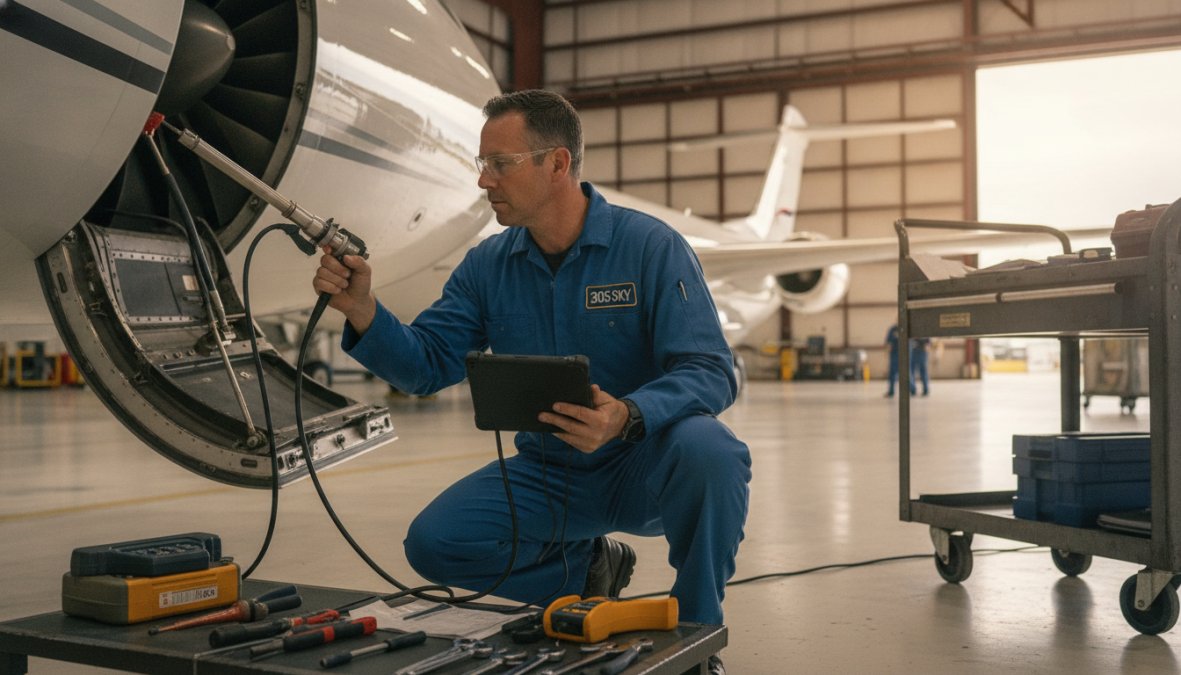
Inspection quality depends entirely on mechanic expertise, attention to detail, and adherence to inspection standards. A certified A&P mechanic has demonstrated knowledge of aircraft systems, inspection procedures, and regulatory requirements. Mechanic experience matters significantly, a mechanic who has inspected hundreds of aircraft recognizes subtle signs of wear that less experienced mechanics overlook.
Human Factors and Inspection Error Prevention
Inspections are human processes, and humans make mistakes. Fatigue affects inspection quality; a mechanic working their tenth hour of the day misses details that a rested mechanic catches. Inspection protocols address these human factors through structured checklists, mandatory rest periods, and peer review requirements. Documentation discipline also prevents errors, when mechanics must document findings in detail, they're more likely to be thorough.
Digital Transformation: Modern Tools and Diagnostic Technology
Aircraft inspection has evolved significantly from purely visual examination. Borescope technology allows mechanics to examine engine internal condition without disassembling the engine. Oil analysis reveals metal particles indicating bearing wear and fuel contamination. Compression testing quantifies engine wear in measurable terms. Thermal imaging detects overheating components, and electrical system testing uses precision instruments to measure voltage, amperage, and resistance. Digital inspection platforms allow mechanics to document findings directly into structured databases, ensuring data is legible, searchable, and backed up.
Data-Driven Maintenance and Performance Optimization
Aggregating inspection data across multiple aircraft reveals patterns that individual inspections cannot show. If five similar aircraft all show corrosion in the same area, that's a design vulnerability worth monitoring. Data-driven maintenance moves beyond "fix what's broken" toward "understand what's wearing and address it proactively."
Cost-Effectiveness and Asset Value: The Financial Case for Routine Inspections
The financial argument for routine aircraft inspections is straightforward: preventive maintenance costs less than reactive maintenance. A $2,000 engine overhaul scheduled before failure costs far less than a $50,000 emergency engine replacement. A typical annual inspection on a single-engine aircraft runs $1,500-$3,000 in labor plus any parts replacement. Over the aircraft's lifetime, an aircraft maintained on schedule costs less per flight hour than an aircraft maintained reactively.
Economic Impact of Deferred Maintenance
Deferred maintenance, postponing scheduled inspections to save short-term costs, creates long-term financial disaster. Every month an inspection is deferred increases the probability that a developing problem goes undetected. Insurance implications compound the problem, many aviation insurance policies require current inspections as a condition of coverage. Operating with deferred maintenance can void your insurance, leaving you exposed to catastrophic financial liability. Resale value reflects maintenance history; an aircraft with complete, documented maintenance history sells for significantly more than one with gaps in records or deferred maintenance.
Extending Aircraft Longevity and Resale Value
Aircraft properly maintained can operate safely and reliably for 40-50 years or more. Structural integrity preservation is the key to longevity. Corrosion addressed early through inspections costs hundreds; corrosion left unaddressed for years costs thousands in repair. Engines maintained on schedule reach their full service life. An aircraft with 20 years of complete inspection records, documented maintenance, and no deferred items sells for a premium.
Sustainability and Environmental Compliance Through Proper Maintenance
Aircraft maintained in peak condition operate more efficiently, consuming less fuel and producing lower emissions. Engine efficiency depends on proper maintenance, a well-maintained engine with clean fuel systems and good compression ratios burns fuel efficiently. Hydraulic system leaks represent environmental hazards; a properly maintained system with inspected seals prevents leaks that contaminate soil and water. Modern environmental regulations increasingly require documentation of aircraft maintenance and environmental compliance. Routine inspections create that documentation, proving that your aircraft operates within environmental standards.
Routine aircraft inspections represent the single most important investment you can make in your aircraft's safety, reliability, and long-term value. At 305 Sky, we understand that your aircraft is a critical tool for your operations. Our comprehensive inspection services, from A Checks through D Checks, backed by 55+ years of combined aviation experience, ensure that your aircraft receives the thorough, professional attention it deserves. We maintain secure digital records of every inspection, track your maintenance schedule automatically, and provide the transparency and expertise you need to operate with confidence. Get a quote today and discover how professional maintenance transforms your aircraft's reliability and value.
Frequently Asked Questions
What is the importance of routine aircraft inspections?
Routine aircraft inspections are essential for maintaining airworthiness, ensuring flight safety, and meeting FAA regulatory requirements. Regular inspections detect mechanical failures early, prevent unplanned downtime, extend aircraft longevity, and protect your investment. They also verify structural integrity and engine reliability, reducing the risk of costly emergency repairs and potential safety incidents.
How often should aircraft inspections be performed?
Inspection intervals depend on aircraft type, usage, and FAA regulations. Most general aviation aircraft require annual inspections, while commercial and high-use aircraft may need 100-hour checks or more frequent A, B, C, and D checks. Your maintenance manual and logbook specify exact schedules. Certified mechanics and maintenance providers can develop a customized schedule based on your aircraft's operational profile and compliance needs.
What are the different types of aircraft maintenance checks?
The four main inspection levels are: A-checks (basic 50-100 hour inspections), B-checks (intermediate 400-600 hour checks), C-checks (major 18-24 month inspections), and D-checks (comprehensive overhauls every 6-10 years). Each level increases in depth and scope. A-checks focus on fluid levels and visible wear; D-checks involve complete disassembly and inspection of the airframe and propulsion system. Your maintenance schedule determines which checks apply.
How do routine inspections prevent costly repairs and downtime?
Early detection of component wear, structural issues, and engine problems prevents catastrophic failures that cause unplanned outages. Preventive maintenance catches problems before they escalate, a small avionics issue found during inspection costs far less than an emergency airframe repair. Scheduled inspections also optimize performance, reduce fuel consumption, and ensure your aircraft meets all regulatory standards, minimizing the financial and operational impact of deferred maintenance.
This article was written using GrandRanker