Table of Contents
- Aircraft Interior Design and Upholstery Fundamentals
- Aircraft Upholstery Materials: Selection and Durability
- FAA Aircraft Interior Flammability Standards and Compliance
- Cabin Refurbishment Services: Seats, Cabinetry, and Finishes
- Private Jet Interior Refurbishment Cost Factors
- Weight and Balance in Aircraft Interior Design
- Maintenance and Care for Aircraft Interiors
- Conclusion
Last Updated: August 7, 2026
Aircraft Interior Design and Upholstery Fundamentals
Aircraft interior design and upholstery represents far more than aesthetics. It's a convergence of engineering precision, regulatory compliance, and material science that directly impacts passenger comfort, aircraft performance, and operational safety. At 305 Sky, we've overseen cabin transformations across South Florida's aviation community, learning that most aircraft owners approach interior work reactively rather than strategically planning for durability, weight optimization, and compliance from the start.
Why Custom Cabin Design Matters
Custom cabin design isn't a luxury; it's a practical investment that affects your aircraft's resale value, operational efficiency, and crew satisfaction. A poorly designed interior can create weight imbalances that degrade fuel efficiency, introduce non-compliant materials, or result in costly rework during inspection.
Professional interior design addresses practical pain points that amateur approaches miss: weight distribution across the fuselage, thermal management in pressurized cabins, accessibility for maintenance, and integration with existing avionics and environmental systems. A cabin designed without considering weight and balance can shift your aircraft's center of gravity enough to require ballast adjustments or fuel management changes.
Core Design Disciplines
Effective aircraft interior design pulls from four core disciplines working in concert.
Structural engineering ensures modifications don't compromise airframe integrity. Every component adds weight and stress points; engineers calculate load paths, fastening requirements, and material compatibility.
Human factors and ergonomics shape how passengers experience the cabin. Seat positioning, aisle width, headroom, lighting, and temperature control influence comfort on multi-hour flights and affect passenger satisfaction and accessibility compliance.
Systems integration coordinates the interior with avionics, environmental controls, electrical systems, and pressurization. A beautifully designed cabin that interferes with air circulation or creates electrical hazards is a liability.
Regulatory compliance underpins everything. FAA regulations govern material flammability, emergency egress, structural attachment points, and electrical safety. Ignoring these during design creates expensive rework or grounds your aircraft.
Aircraft Upholstery Materials: Selection and Durability
Choosing the right upholstery materials is where design intent meets real-world durability. The materials you select determine how your cabin looks, feels, wears, and whether it passes regulatory inspection.
Leather and Vinyl Options
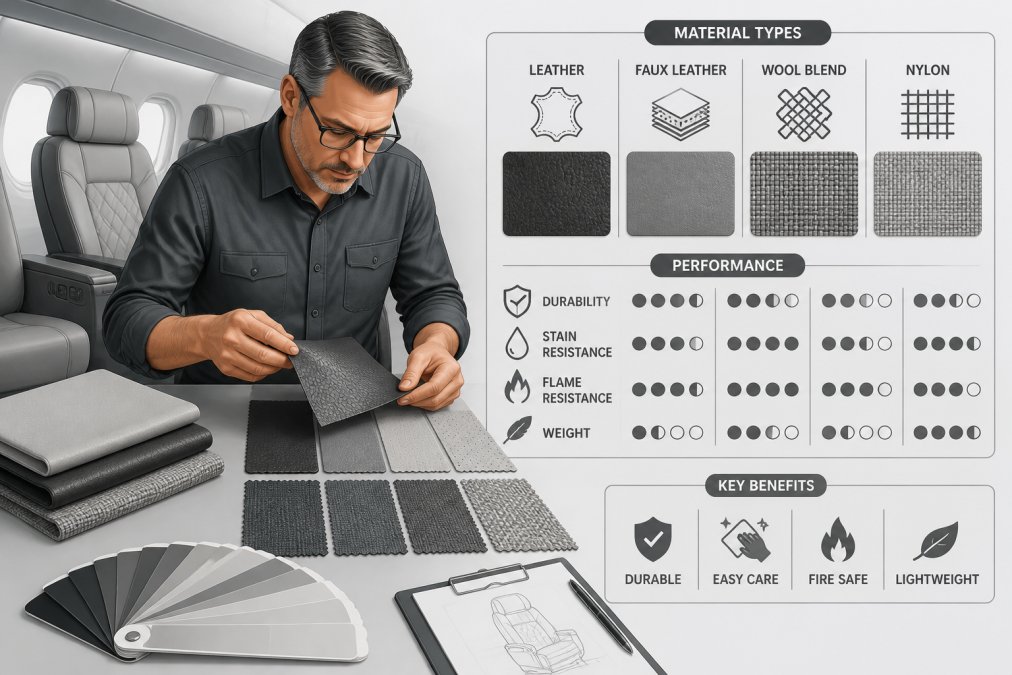
Leather has dominated aircraft upholstery for decades because it delivers durability, aesthetic appeal, and easy maintenance. Aviation-grade leather must meet FAR 25.853 burn certification standards.
Slipstream aviation leather, available through suppliers like Carolyn Fabrics, represents the standard for custom aircraft work. It comes in 32 colors, sold by the full hide (approximately 50-55 square feet), and includes burn-test documentation proving compliance. The material resists staining, cleans easily with mild soap and water, and ages gracefully.
Vinyl offers a lower-cost alternative with similar durability. Aviation-grade vinyl withstands temperature fluctuations, UV exposure, and moisture better than standard upholstery vinyl. Both materials require proper fastening and seaming to prevent separation in pressurized flight, with stitching using aviation-grade thread and seams reinforced with binding tape.
Fabrics, Foam, and Flooring
Aircraft cabins require upholstery for sidewalls, headliners, and accent panels. Wool-nylon blends dominate aircraft fabric applications, providing natural fire resistance and sound absorption while meeting FAR 25.853 requirements without excessive weight. Gilbreath Upholstery Supply stocks a comprehensive range of FAA-approved fabrics.
Aircraft-grade foam must be flame-resistant and low-smoke-producing. Standard furniture foam fails certification and creates toxic smoke in a fire. Aviation foam costs more but adds negligible weight while meeting safety requirements. Typical cabin seating uses 2-4 inch foam cores, with denser foam in high-stress areas.
Flooring choices range from carpet to vinyl sheet goods to specialty aviation flooring. Carpet adds warmth and sound dampening but requires careful maintenance. Vinyl flooring resists moisture and cleans easily. Modular carpet tiles allow selective replacement if damage occurs in high-traffic zones.
Wool-Nylon Blends and Specialty Textiles
Wool-nylon blends, typically 80% wool / 20% nylon, represent the sweet spot for aircraft interior fabrics. The blend resists flames, absorbs sound, and resists staining while maintaining a refined appearance. Specialty textiles address specific cabin needs: acoustic fabrics reduce cabin noise, moisture-resistant fabrics prevent mildew in humid climates like South Florida, and antimicrobial textiles reduce odor and bacterial growth.
SCS Interiors specializes in custom-cut upholstery solutions for specific aircraft models: Cirrus, Piper, Cessna, Beechcraft, and others. Their made-to-order approach eliminates custom pattern development, reducing lead times and ensuring precise fit.
FAA Aircraft Interior Flammability Standards and Compliance
FAA flammability standards aren't suggestions; they're regulatory requirements that apply to every material touching the interior of a certified aircraft.
FAR 25.853 Burn Certification Requirements
FAR Part 25.853 establishes flammability standards for aircraft interior materials through three test methods, depending on material type and location.
Vertical Burn Test (FAR 25.853(a)) applies to most cabin materials. A sample is suspended vertically, and a gas flame ignites the bottom edge for 60 seconds. The material must not burn more than 8 inches vertically or drip flaming particles.
Horizontal Burn Test (FAR 25.853(b)) applies to materials in certain cabin locations. The sample lies horizontal, and a flame applies from one end. The material must not sustain flame propagation beyond 6 inches from the ignition point within 60 seconds. This test is more stringent than vertical testing.
Smoke and Heat Release Test (FAR 25.853(d)) measures smoke production and heat release during combustion. Materials must limit smoke generation and heat release to specified thresholds, addressing the reality that smoke and toxic gases kill more aircraft fire victims than flames.
Not all aircraft interior materials require the same level of testing. Seat cushions must pass all three tests. Sidewall panels typically require vertical burn testing. Flooring may require horizontal burn testing. The location and function of the material determine which tests apply.
Compliance documentation is essential. Suppliers like Carolyn Fabrics and Gilbreath provide burn-test reports with their materials. When you purchase aviation-grade leather or fabric, insist on this documentation.
Documentation and Proof of Compliance
Every material installed in a certified aircraft interior must have supporting documentation proving FAR 25.853 compliance. Maintain a compliance file containing burn-test reports for every fabric, leather, foam, and flooring material; installation photographs; work orders and maintenance logs; and certification letters from the shop or technician who performed the work.
During annual inspections or pre-buy evaluations, inspectors verify that interior materials meet requirements. Non-compliant materials discovered during inspection ground your aircraft until corrected.
Cabin Refurbishment Services: Seats, Cabinetry, and Finishes
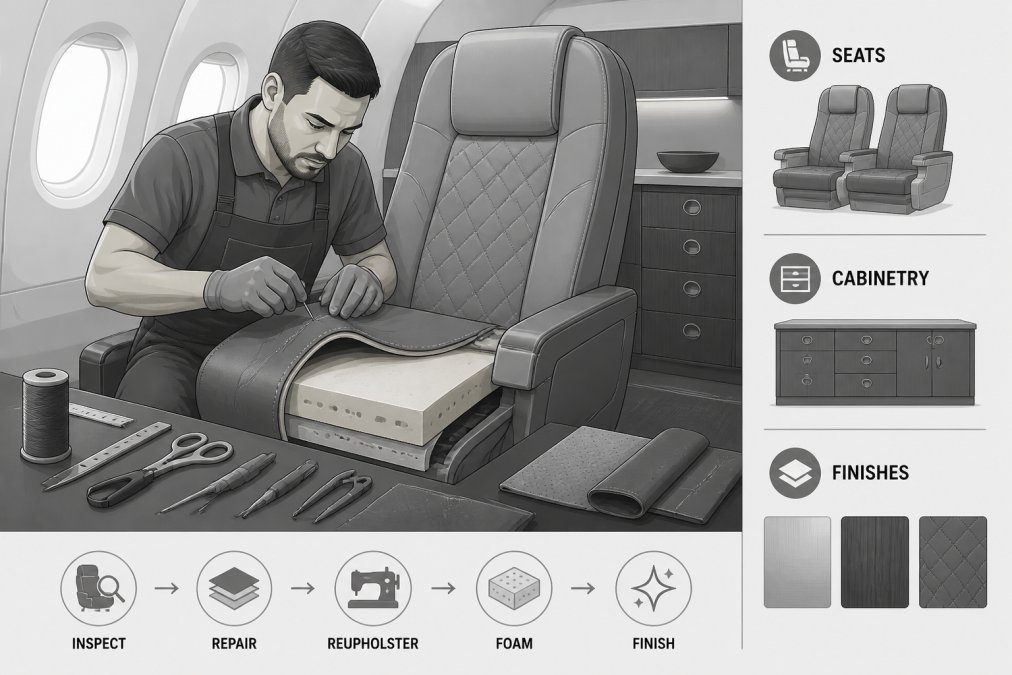
Comprehensive cabin refurbishment addresses three interconnected elements: seating systems, structural components, and aesthetic finishes.
Seat Reupholstery and Custom Seating Solutions
Seat refurbishment is often the most visible component of cabin work, yet it's also the most technically demanding. Aircraft seats must support specific load limits, integrate with restraint systems, and provide ergonomic comfort across long flight durations.
Professional seat reupholstery begins with structural evaluation. Technicians inspect the seat frame for cracks, corrosion, or fatigue. If the frame is sound, they remove existing upholstery, inspect and replace foam as needed, and install new leather or fabric covers with precision stitching.
Custom seating solutions design new seating configurations optimized for your mission.
Cabinetry, Woodwork, and Headliner Installation
Beyond seating, cabin refurbishment typically includes cabinetry, woodwork, and headliner systems.
Cabinetry includes galleys, lavatories, storage lockers, and beverage bars. Professional cabinetry work integrates with electrical systems (refrigeration, lighting), plumbing (water, waste), and structural attachment points.
Woodwork brings warmth and sophistication to aircraft cabins. Veneer panels, trim work, and structural elements can be crafted from exotic woods (teak, walnut, mahogany) or lighter options (ash, maple) depending on weight constraints. Wood must be sealed and finished to prevent moisture absorption in pressurized environments.
Headliner installation covers the upper cabin structure, concealing wiring, structural components, and insulation. Modern headliners use lightweight composite materials or fabric-covered panels that reduce weight compared to older plywood systems.
Cabin Aesthetics and Design Customization
The final layer of cabin refurbishment is aesthetic customization: color schemes, lighting design, accent materials, and finishing touches that create a cohesive environment.
Lighting significantly influences cabin perception. LED lighting systems offer advantages over incandescent systems: lower heat output, improved color rendering, and dimming capability that reduces fatigue on long flights. Color selection requires careful consideration, light colors make small cabins feel larger but show wear more readily, while dark colors hide wear but can feel claustrophobic. Mid-tone palettes with accent colors often deliver the best balance.
Artwork, decorative panels, and custom finishes personalize the space. Corporate aircraft often feature company branding. Private jets may showcase personal collections.
Private Jet Interior Refurbishment Cost Factors
Understanding what drives refurbishment costs helps you budget effectively and make informed decisions about scope and materials.
What Drives Interior Refurbishment Pricing
Interior refurbishment pricing depends on several interconnected factors.
Scope of work is the primary cost driver. A straightforward seat reupholstery costs significantly less than a complete cabin reconfiguration that includes new cabinetry, headliner replacement, and flooring.
Material selection creates wide cost variation. Aviation-grade leather costs more than vinyl; wool-nylon blends cost more than standard fabrics; exotic wood veneers cost more than composite finishes.
Labor complexity reflects the technical difficulty and time required. Simple reupholstery requires less labor than designing and fabricating custom seating. Integrating new cabinetry with existing electrical and plumbing systems requires specialized skills and extended labor hours.
Aircraft type and size influence both material quantities and labor requirements. Refurbishing a Cessna 208 cabin requires less material and labor than a Gulfstream G650.
Turnaround timeline affects costs. Rush projects command higher pricing. Standard projects with flexible timelines allow shops to optimize labor efficiency.
Timeline and Labor Considerations
Refurbishment timelines typically span 4-12 weeks, depending on scope. A straightforward seat reupholstery might complete in 2-3 weeks. A complete cabin transformation can extend 12+ weeks.
Labor bottlenecks often emerge during integration phases. For operators with tight schedules, modular approaches help, phased work allows you to prioritize high-impact elements while deferring secondary finishes to a later phase.
Weight and Balance in Aircraft Interior Design
Every pound added to an aircraft interior affects fuel efficiency, performance, and operational costs. Professional interior design accounts for weight systematically rather than treating it as an afterthought.
Weight and balance calculations begin with your aircraft's empty weight and center of gravity (CG). Interior modifications shift the CG and increase total weight. Significant shifts can move the CG outside allowable limits, requiring ballast adjustments or fuel management changes.
Lighter materials reduce weight impact. Composite cabinetry weighs less than traditional wood. Lightweight foam reduces seat weight. Modular components allow selective replacement. A well-designed lightweight interior might weigh 10-15% less than a conventionally designed cabin.
CG management becomes critical in aircraft with limited CG envelopes. Professional designers calculate component placement carefully to maintain balance within operational limits. The practical outcome is payload optimization: an aircraft with a lighter, better-balanced interior can carry more useful load, additional fuel, cargo, or passengers, without exceeding weight limits.
Maintenance and Care for Aircraft Interiors
Professional installation means nothing if maintenance and care aren't prioritized. Aircraft interiors operate in unique environments, pressurized cabins, temperature extremes, moisture exposure, that demand specific care protocols.
Leather and vinyl require regular cleaning with aviation-approved products. Mild soap and water work for routine cleaning; specialized leather conditioners maintain suppleness and prevent cracking. Fabric surfaces benefit from regular vacuuming and spot cleaning. Spills should be addressed promptly to prevent staining and moisture absorption.
Cabinetry and woodwork need protection from moisture, UV exposure, and temperature fluctuations. Sealed finishes should be inspected regularly for cracks or peeling. In humid environments like South Florida, proper ventilation and occasional dehumidification prevent mildew and wood degradation.
Fasteners and attachment points require periodic inspection. Pressurization cycles create stress on fasteners; vibration can loosen connections. Annual inspections should verify that cabinetry, headliners, and seating remain properly secured.
Documentation of maintenance extends interior life and supports resale value. Keeping records of cleaning, repairs, and professional service demonstrates proper maintenance.
Aircraft interior design and upholstery demands technical knowledge, regulatory awareness, and attention to detail that separates professional results from costly mistakes. The materials you choose, the compliance documentation you maintain, and the weight management you prioritize determine whether your refurbishment delivers lasting value.
305 Sky brings 55+ years of combined aviation experience to cabin transformations across South Florida. Our team handles everything from material selection and FAA compliance documentation to complete refurbishment coordination, ensuring your aircraft meets regulatory standards while delivering the aesthetic and functional improvements you envision. Whether you're refreshing aging interiors or transforming a cabin for a new mission profile, we deliver transparent pricing, detailed project planning, and the technical expertise that protects your aircraft investment. Get a quote today and discover why aircraft owners throughout South Florida trust 305 Sky for their interior refurbishment needs.
Frequently Asked Questions
What FAA flammability requirements apply to aircraft interior materials?
The FAA requires all aircraft interior materials to meet FAR 25.853 burn certification standards. Materials must pass specific flammability tests, including the 12-second burn test and smoke emission limits. All upholstery, fabrics, foams, and cushioning must include documentation proving compliance. When selecting aircraft upholstery materials, verify that suppliers provide burn-test certificates with every shipment. Non-compliance can ground your aircraft or void airworthiness certification.
How much does a private jet interior refurbishment typically cost?
Private jet interior refurbishment cost depends on aircraft size, scope of work, material selection, and labor intensity. A simple seat reupholstery project may run several thousand dollars, while a complete cabin transformation with custom cabinetry, new flooring, and headliner installation can exceed six figures. Factors include leather grade selection, custom stitching, engineering time, and FAA certification requirements. Contact 305 Sky for a detailed quote tailored to your specific aircraft and design goals.
What aircraft upholstery materials are FAA-approved and durable?
FAA-approved aircraft upholstery materials include aviation-grade leather (such as Slipstream leather), fire-retardant vinyl, wool-nylon blends, and certified fabrics. These materials must meet FAR 25.853 flammability standards and provide durability for high-use environments. Leather offers luxury and longevity, while wool-nylon blends provide cost-effective durability and sound absorption. Foam, headliner materials, and flooring must also carry burn certification. Work with suppliers like Gilbreath Upholstery Supply or Carolyn Fabrics that specialize in certified aviation materials.
Who is responsible for certifying aircraft interior modifications?
The aircraft owner or operator is ultimately responsible for ensuring interior modifications comply with FAA regulations. However, certified maintenance personnel, engineering firms, and MROs handle the technical certification process. For complex modifications, the FAA may require a Supplemental Type Certificate (STC) or a field approval. Companies like Collins Aerospace provide expert engineering and certification services. Your maintenance provider should guide you through all regulatory requirements and obtain necessary approvals before installation.
This article was written using GrandRanker