Table of Contents
- What AOG Means and Why Minutes Matter
- Step-by-Step AOG Activation Protocol
- 24/7 AOG Support Response Time in Miami
- FAA Part 145 Repair Station Miami: Regulatory Foundation
- AOG Logistics and Parts Procurement: Getting You Airborne
- Cost Transparency and Billing Models for Emergency Maintenance
- Common Mistakes to Avoid During an AOG Event
- Return to Service Documentation and Compliance Checklist
Emergency AOG Aircraft Support Miami: 24/7 Response Guide
Last Updated: August 3, 2026
What AOG Means and Why Minutes Matter
Aircraft on ground (AOG) is an aviation crisis demanding immediate action. Every hour of downtime translates to lost revenue, missed commitments, and operational chaos. Aircraft downtime costs operators between $3,000 and $15,000 per day depending on aircraft type and mission criticality.
At 305 Sky, we understand that AOG situations require coordinated response combining rapid dispatch, certified expertise, and parts availability happening simultaneously. The difference between a two-hour resolution and a two-day grounding often comes down to which support provider you call first.
Step-by-Step AOG Activation Protocol
When your aircraft experiences an unscheduled maintenance event, the first 15 minutes determine your outcome.
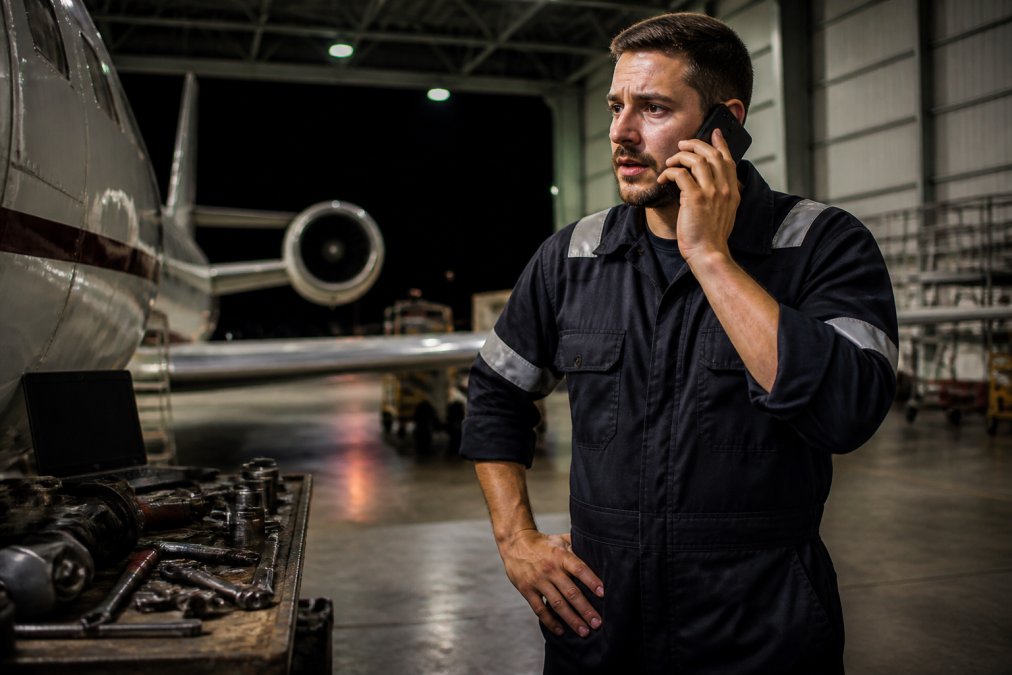
Step 1: Verify the Grounding (0-5 minutes) Call your AOG provider immediately with tail number and location. Clarify whether this is a hard grounding (aircraft cannot fly safely) or soft grounding (aircraft could fly but shouldn't). This distinction determines whether they dispatch a mobile team or advise remote troubleshooting first.
Step 2: Provide Critical Aircraft Data (5-10 minutes) Have ready: tail number, aircraft type, current location, nature of the malfunction, last maintenance performed, and crew status. Confirm the AOG provider can access your location.
Step 3: Authorize Mobile Dispatch (10-15 minutes) The provider will quote arrival time and dispatch cost. In an AOG situation, authorize immediately. The cost of two additional hours of downtime exceeds the dispatch fee in virtually every scenario.
Step 4: Prepare Aircraft Access and Documentation (Ongoing) Ensure someone is available at the aircraft to grant technician access. Have maintenance logs, the aircraft's POH (Pilot's Operating Handbook), and recent inspection reports accessible.
What Information to Have Ready
Keep this information in a single document, digitally accessible, and updated quarterly:
- Aircraft identification: Tail number, make, model, serial number, registration status
- Engine and powerplant data: Engine type, serial numbers, total time since new, last overhaul date
- Avionics suite: Glass cockpit type, autopilot model, navigation systems, last software update
- Maintenance records: Last 100-hour inspection date, last annual inspection date, open airworthiness directives
- Facility access: Hangar location, gate codes, facility contact, after-hours access procedures
- Key personnel: Pilot name and contact, flight department manager, aircraft owner contact, insurance provider
During an AOG event, you're providing information, not searching for it.
How Dispatch and Mobile Response Work
When you authorize AOG support, dispatch simultaneously locates the nearest certified technician with appropriate ratings for your aircraft type, coordinates parts availability, and calculates the fastest route to your location.
A true 24/7 mobile response operation maintains technicians distributed across the service area. Response times typically range from 30-60 minutes for most South Florida locations. Once the mobile technician arrives, they diagnose the failure, determine if it's repairable on-site or requires removal to a facility, and source replacement components immediately. Many AOG events resolve in 2-4 hours because the technician carries common replacement parts and can perform line maintenance without hangar access.
24/7 AOG Support Response Time in Miami
Response time is the primary metric separating genuine 24/7 AOG support from shops claiming 24/7 availability but operating on a callback basis.
A credible 24/7 AOG support provider in Miami maintains:
- Dispatch center staffed 24 hours, 365 days per year, with someone answering the phone immediately
- Mobile technicians on rotating on-call schedules, ensuring certified personnel are available to mobilize immediately
- Pre-positioned mobile units, equipped with common tools, diagnostic equipment, and frequently-needed parts
- Parts relationships, established agreements with suppliers ensuring rapid component availability
Realistic response times in the Miami area range from 30 minutes (for aircraft at major facilities) to 90 minutes (for remote or private facilities). Resolution time depends entirely on the failure mode. A fuel system contamination issue might resolve in 2 hours. A failed alternator might require 4-6 hours to source and install.
FAA Part 145 Repair Station Miami: Regulatory Foundation
Emergency AOG aircraft support operates within FAA regulations, and every technician performing work must hold appropriate certification.
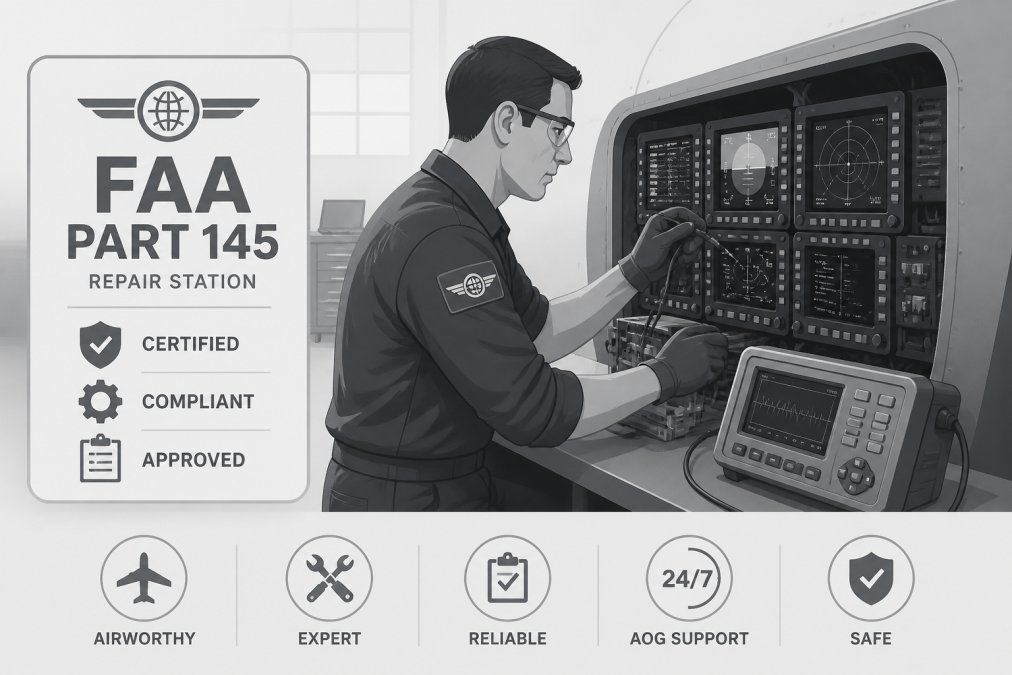
An FAA Part 145 repair station is a facility certified by the Federal Aviation Administration to perform aircraft maintenance, preventive maintenance, and alterations. For AOG support, Part 145 certification matters because it means:
- Technicians hold FAA airframe and powerplant (A&P) licenses, having passed written, oral, and practical exams
- Maintenance is documented in FAA-approved formats, following federal standards
- Parts traceability is maintained, with replacement components tracked and documented
- Quality assurance processes are audited regularly, with annual FAA inspections
When an AOG provider sends a mobile technician, that technician should hold an A&P license. When they perform maintenance, they should document it on FAA-approved forms. For major repairs or component replacements that can't be completed in the field, the aircraft moves to a Part 145 repair station.
AOG Logistics and Parts Procurement: Getting You Airborne
Technical diagnosis is only half of an AOG resolution. The other half is parts logistics, getting the right component to your aircraft within hours of identifying the failure.
Standard parts ordering takes 5-10 business days. An AOG situation requires the part in 4-8 hours. That acceleration demands established relationships with parts suppliers, credit agreements enabling immediate shipment, and courier services moving parts across the country overnight.
A mature AOG support provider maintains relationships with multiple parts suppliers and has pre-negotiated agreements enabling rapid parts access. The logistics chain looks like this: diagnosis ? parts search (5-15 minutes) ? supplier confirmation (5-10 minutes) ? parts shipment (2-6 hours) ? technician installation (1-4 hours). Total elapsed time from diagnosis to return to service is typically 8-16 hours for common failures.
For operators in the Miami area, logistics advantage is significant. Miami has major aircraft parts suppliers, FBOs with extensive inventory, and proximity to multiple regional airports receiving parts shipments.
Cost Transparency and Billing Models for Emergency Maintenance
Understanding how AOG providers charge removes anxiety and enables faster decision-making.
Transparent AOG billing typically includes:
Dispatch Fee: A fixed charge for mobilizing a technician, typically $500-$1,500 depending on distance and time of day.
Labor Rate: Hourly rate for technician time, typically $150-$250 per hour depending on certification and specialization. Labor is charged from departure until the technician leaves your location.
Parts Cost: Actual cost of replacement components plus a markup (typically 15-25%) covering procurement and logistics.
Facility Charges: If the aircraft must move to a facility, charges include hangar rental, equipment use, and administrative overhead.
After-Hours Surcharge: Many providers charge a 25-50% premium for AOG calls outside normal business hours.
A provider offering "transparent pricing" should quote a total estimated cost before authorizing work: "Dispatch fee $750, estimated 4 hours labor at $200/hour = $800, estimated parts cost $1,200 plus 20% markup = $1,440. Total estimate: $2,990."
Common Mistakes to Avoid During an AOG Event
AOG situations are stressful, and stress leads to poor decisions.
Mistake 1: Delaying the AOG call to save money. Every hour your aircraft sits on the ground costs $125-$625 in lost revenue. The $750 dispatch fee is recovered in one hour of prevented downtime.
Mistake 2: Providing incomplete aircraft information. The provider can't diagnose your issue without knowing the aircraft type, recent maintenance history, and current symptoms.
Mistake 3: Assuming your regular maintenance shop can mobilize for AOG. Call a dedicated AOG provider instead.
Mistake 4: Authorizing repair without understanding the failure. Ask the technician to explain the failure, repair approach, and estimated resolution time before authorizing work.
Mistake 5: Choosing the cheapest quote in an AOG situation. Speed and reliability matter more than price.
Mistake 6: Failing to document the repair. Insist on proper documentation: maintenance log entries, FAA Form 337 if required, parts traceability records.
Mistake 7: Not following up on root cause. After the emergency is resolved, investigate the root cause and address it to prevent recurrence.
Return to Service Documentation and Compliance Checklist
Once the repair is complete, your aircraft doesn't return to service until proper documentation is filed and regulatory compliance is confirmed.
Return to Service (RTS) Documentation Requirements:
| Documentation Type | When Required | Who Completes | Consequence if Missing |
|---|---|---|---|
| Maintenance Log Entry | Every maintenance action | A&P Technician | Aircraft cannot legally fly |
| FAA Form 337 | Major repairs and alterations | A&P Technician and IA | Aircraft cannot be registered |
| Airworthiness Directive Compliance | When applicable to repair | A&P Technician | FAA can ground aircraft |
| Parts Traceability Record | All replacement components | Repair facility | Component becomes unairworthy |
| Work Order and Invoice | All repairs | Repair facility | No proof of maintenance performed |
Compliance Checklist Before Flight:
- Maintenance log entry signed by A&P technician and dated
- FAA Form 337 filed with the FAA if major repair was performed
- All airworthiness directives applicable to the repaired component are current
- Parts used are documented with manufacturer, part number, and serial number (if applicable)
- Repair facility provided a written invoice detailing all work performed
- Aircraft maintenance records updated with the new entry
- No open maintenance items remain from the AOG event
- Flight test or functional check completed if required by the repair scope
- Insurance provider notified of the repair (if required by your policy)
The aircraft is only airworthy once documentation is complete and compliance is verified.
Emergency AOG aircraft support Miami is more than a phone number you call when something breaks. It's a relationship you establish before the emergency happens, with a provider who can mobilize immediately, diagnose accurately, and resolve the issue with transparent communication and proper documentation. 305 Sky offers 24/7 mobile response, FAA Part 145 repair station capability, and transparent billing that removes the guesswork from emergency maintenance. With 55+ years of combined aviation experience and four strategically located South Florida facilities, we've built our reputation on getting aircraft back in service fast. Get a quote and establish your AOG support relationship before you need it.
Frequently Asked Questions
What does AOG mean in aviation, and why does it require immediate response?
AOG stands for Aircraft On Ground, meaning an unscheduled maintenance issue has grounded your aircraft and prevented flight operations. AOG events demand immediate response because every hour of downtime costs operators thousands in lost revenue, missed charter flights, or delayed business travel. Emergency AOG aircraft support in Miami prioritizes rapid diagnostics, mobile repair teams, and parts procurement to minimize turnaround time and restore your aircraft to service as quickly as possible.
How do I activate 24/7 AOG support response time when my aircraft goes down at 2 AM?
Call your AOG support provider directly with your aircraft tail number, location, and a brief description of the issue. Have your maintenance logs and aircraft documentation accessible. The dispatch team will assign a mobile repair unit and parts procurement specialist immediately. Response times vary, but professional AOG services in Miami typically dispatch within 30-60 minutes. Your provider will keep you updated on ETA and what technicians will need on-site. Confirm your aircraft's location accessibility for the mobile repair van.
Why does FAA Part 145 repair station certification matter for emergency AOG repairs?
FAA Part 145 certification ensures your repair station maintains strict regulatory compliance, employs certified A&P technicians, and follows approved maintenance procedures. This certification is required to issue Return to Service documentation that authorizes your aircraft to fly legally. During an AOG event, working with an FAA Part 145 repair station in Miami guarantees your emergency maintenance meets federal aviation safety standards and won't create compliance issues later. Non-certified shops may perform repairs that require re-inspection or rework.
How does AOG logistics and parts procurement work when you need a component immediately?
Your AOG provider maintains relationships with parts distributors and suppliers across the aviation industry. When a component fails, the logistics team identifies the correct part, verifies availability, and coordinates expedited delivery to your aircraft location. For common components, many repair stations stock inventory on-site or in nearby facilities. For specialized avionics or airframe parts, procurement specialists contact vendors, arrange overnight shipping, and track delivery in real time. This parallel workflow keeps technicians working on accessible repairs while critical parts arrive.
This article was written using GrandRanker