Table of Contents
- Why Minimizing Aircraft Downtime Matters to Your Operation
- Step 1: Establish a Proactive Preventive Maintenance Program
- Step 2: Deploy Predictive Maintenance Aviation Techniques
- Step 3: Optimize MRO Software Benefits for Your Fleet
- Step 4: Master Aircraft Maintenance Best Practices
- Step 5: Manage Aircraft on Ground (AOG) Risk Proactively
- Step 6: Build Supply Chain Resilience and Spare Parts Logistics
- Step 7: Coordinate Maintenance Planning with Flight Operations
How to Minimize Aircraft Downtime: 7 Proven Strategies
Last Updated: July 28, 2026
Every hour your aircraft sits on the ground costs money. Whether you're operating a single-engine plane or managing a fleet, aircraft downtime directly impacts your bottom line and operational reliability. Learning how to minimize aircraft downtime means building a system that keeps your aircraft flying and your operation profitable.
At 305 Sky, we've spent over 55 years helping operators across South Florida understand what separates aircraft that fly reliably from those that spend too much time in the hangar. The strategies in this guide have been tested with real aircraft, real operators, and real constraints. Below, we'll show you exactly how to minimize aircraft downtime through seven interconnected approaches that reduce ground time, prevent unexpected failures, and keep your aircraft mission-ready.
Why Minimizing Aircraft Downtime Matters to Your Operation
Aircraft downtime is expensive beyond direct maintenance costs. Every day your aircraft isn't flying represents lost revenue, missed business opportunities, and eroded competitive advantage. For charter operators, that's canceled flights and disappointed clients. For business aviation, that's missed meetings and damaged relationships. For training operations, that's revenue that vanishes.
The real problem isn't maintenance itself, it's unplanned maintenance. When an aircraft goes down unexpectedly, you're scrambling to find mechanics, sourcing emergency parts, and rescheduling operations. Scheduled maintenance happens on your timeline with parts on hand and your team prepared. The goal is to reduce both how often maintenance happens AND how long it takes when it does.
Step 1: Establish a Proactive Preventive Maintenance Program
Preventive maintenance is the foundation of minimizing aircraft downtime. A proactive program catches small problems before they become catastrophic failures that ground your aircraft for weeks. Perform scheduled maintenance at regular intervals based on flight hours, calendar time, or cycle counts to prevent sudden failures that create unplanned downtime.
Scheduled vs. Unscheduled Maintenance: Know the Difference
Scheduled maintenance happens on your timeline with preparation and planning. Unscheduled maintenance happens when something fails unexpectedly, it's expensive, disruptive, and often happens at the worst possible time. Operators who maintain rigorous preventive maintenance schedules typically see 40-60% reductions in unexpected downtime compared to reactive-only approaches.
Setting Realistic Maintenance Intervals
Maintenance intervals should be based on manufacturer recommendations but reflect your actual operating patterns. An aircraft flying 500 hours per year has different maintenance needs than one flying 2,000 hours annually. An aircraft operating in harsh coastal environments like South Florida experiences accelerated wear compared to inland operations. Document your intervals clearly in a maintenance planning document that specifies what gets done, when, and why.
Step 2: Deploy Predictive Maintenance Aviation Techniques
Predictive maintenance uses condition monitoring to determine when maintenance is actually needed. You replace components based on their actual condition, not just calendar time. This requires data collection, analysis, and discipline to act on what the data tells you.
Wear Pattern Analysis and Component Reliability
Every component tells a story through its wear patterns. Landing gear, engines, hydraulic systems, and avionics all degrade predictably if you're monitoring them correctly. Catch degradation early, before it becomes failure. Wear pattern analysis starts with baseline data, what does a healthy component look like? Once established, track deviations. When a component deviates from normal patterns, that's your signal to investigate or schedule maintenance.
Reducing No-Fault-Found (NFF) Events
No-Fault-Found events waste time and money. An aircraft comes in with a reported problem, mechanics investigate, can't reproduce the issue, and the aircraft goes back into service. The problem recurs, and you're back in the hangar again. Reduce NFF by implementing systematic diagnostic approaches and ensuring mechanics have access to complete historical data. Many operators reduce NFF events by 30-50% simply by improving troubleshooting protocols.
Step 3: Optimize MRO Software Benefits for Your Fleet
MRO (Maintenance, Repair, and Overhaul) software gives you visibility into your entire maintenance operation, what's been done, what's scheduled, what parts you have on hand, and what's coming due. Treat MRO software as your single source of truth for all maintenance decisions, creating a complete historical record that informs your maintenance planning.
Digital Twin Technology and Real-Time Monitoring
Digital twin technology creates a virtual replica of your aircraft that mirrors its real-world condition. Sensors feed data into the digital twin, which continuously models aircraft performance and predicts failures before they happen. An engine digital twin tracks fuel consumption, temperature patterns, and vibration signatures. When metrics deviate from normal patterns, the system alerts you, allowing you to schedule maintenance at your convenience rather than responding to unexpected failure.
Technical Logbooks and Defect Analysis Integration
Your technical logbook is the DNA of your maintenance operation. Every flight, maintenance action, and defect report goes into the logbook, creating detailed history of your aircraft's condition and maintenance needs. Defect analysis reveals patterns, are certain systems failing repeatedly? Modern MRO software integrates technical logbooks with defect analysis tools, making it easy to spot patterns and identify which components drive the most downtime.
Step 4: Master Aircraft Maintenance Best Practices
Aircraft maintenance best practices have evolved over decades of operational experience. Operators who follow established best practices consistently achieve better reliability and lower downtime than those cutting corners.
Reliability-Centered Maintenance (RCM) Framework
Reliability-Centered Maintenance is a structured approach to determining what maintenance is necessary to keep an aircraft reliable and safe. Instead of doing maintenance because "that's what the manual says," RCM asks: what could fail, what would be the consequence, and what's the most cost-effective way to prevent it? RCM analysis identifies critical systems and components, determines failure modes and causes, and assesses consequences. Based on answers, you determine optimal maintenance approaches. The RCM framework prevents over-maintenance and under-maintenance, focusing resources on what actually matters for safety and reliability.
Optimizing Repair Turnaround Time (TAT) and Mean Time to Repair (MTTR)
Repair Turnaround Time (TAT) is how long from when an aircraft enters the hangar until it's ready to fly. Mean Time to Repair (MTTR) is the average time required to complete a specific maintenance task. Both metrics directly impact aircraft availability. Reducing TAT requires having the right parts on hand, trained mechanics available, and clear work plans. Many operators cut TAT by 20-30% simply by improving planning and coordination.
Step 5: Manage Aircraft on Ground (AOG) Risk Proactively
Aircraft on Ground situations are expensive, stressful, and often preventable through better planning. The key is reducing unexpected failures through preventive maintenance, predictive maintenance, and proactive management. You also need to be prepared when AOG situations occur.
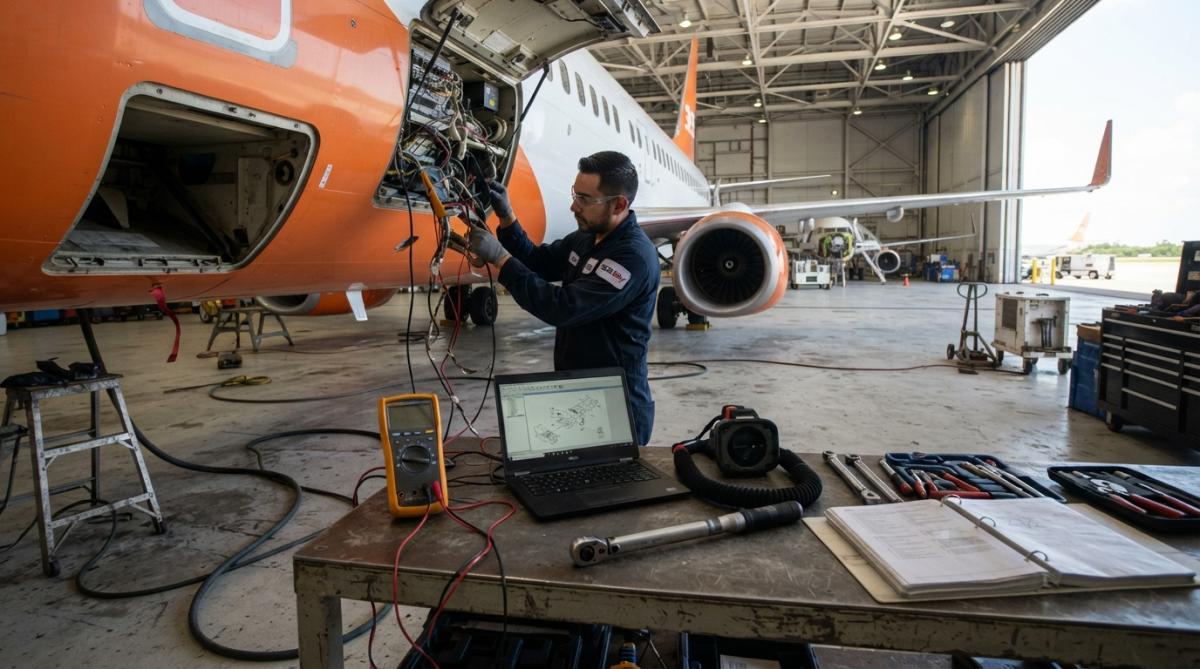
Emergency Response Planning and 24/7 Support Coordination
AOG response requires immediate action. Establish an AOG response plan before you need it. Identify which maintenance issues are truly critical, establish relationships with parts suppliers who can provide emergency delivery, and ensure your maintenance team knows escalation procedures. 305 Sky provides 24/7 AOG emergency response with mobile maintenance capabilities. Our team can respond to aircraft emergencies anywhere in South Florida with a fully equipped mobile van, often getting your aircraft flying again without requiring towing to a facility.
Critical Spare Parts Inventory Strategy
Running out of a critical part during maintenance grounds your aircraft while mechanics wait and costs accumulate. Strategic spare parts inventory balances having needed parts on hand versus not tying up too much capital. Categorize parts based on criticality and lead time. Critical parts with long lead times should be stocked. Inexpensive parts with short lead times can be ordered as needed.
Step 6: Build Supply Chain Resilience and Spare Parts Logistics
Supply chain disruptions have become a significant risk. A delayed parts shipment can ground your aircraft for days or weeks. Build supply chain resilience by diversifying suppliers, maintaining strategic inventory, and having contingency plans.
Just-in-Time Parts Management vs. Strategic Stockpiling
Just-in-time parts management works when supply chains are reliable. But when supply chains are disrupted, just-in-time becomes just-too-late. Strategic stockpiling maintains inventory of parts you know you'll need. Many operators use a hybrid approach: just-in-time for common, fast-delivery parts and strategic stockpiling for critical components with long lead times.
Vendor Relationships and Lead Time Forecasting
Your relationships with parts suppliers directly impact your ability to minimize aircraft downtime. A supplier who prioritizes your orders and communicates proactively about lead times is worth paying a premium for. Lead time forecasting means understanding how long each critical part takes to obtain and planning accordingly. Build relationships with multiple suppliers for critical parts so you have backup options if your primary supplier can't deliver.
Step 7: Coordinate Maintenance Planning with Flight Operations
Many operators treat maintenance planning and flight operations as separate functions. Effective aircraft downtime minimization requires tight coordination between maintenance and flight operations. Flight operations needs to understand maintenance requirements and plan schedules around them. Maintenance needs to find windows that minimize disruption.
Planning Overhauls During Off-Peak Seasons
Major overhauls are necessary but time-consuming. An engine overhaul can take weeks or months. Schedule these during off-peak seasons to minimize revenue impact. Plan 3-6 months in advance, ensuring parts are on order and your maintenance facility is scheduled.
Fleet-Wide Maintenance Efficiencies and Asset Use
If you operate multiple aircraft, you have opportunities to create efficiencies across your fleet. Aircraft with similar models can share spare parts inventory. Maintenance teams can develop specialized expertise in specific aircraft types. Fleet-wide maintenance planning allows you to stagger major maintenance across different aircraft, ensuring you always have aircraft available for operations.
| Strategy | Focus Area | Expected Impact | Timeline |
|---|---|---|---|
| Preventive Maintenance | Scheduled maintenance intervals | Reduces unplanned downtime | Ongoing |
| Predictive Maintenance | Condition monitoring and wear analysis | Catches failures early | 3-6 months to implement |
| MRO Software Integration | Digital record-keeping and planning | Improves decision-making | Immediate after setup |
| RCM Framework | Maintenance optimization | Eliminates unnecessary work | 6-12 months for full analysis |
| AOG Response Planning | Emergency readiness | Reduces AOG duration | Before first AOG occurs |
| Supply Chain Resilience | Parts inventory and vendor relationships | Prevents supply delays | Ongoing management |
| Flight/Maintenance Coordination | Scheduling integration | Reduces scheduling conflicts | Immediate implementation |
Minimizing aircraft downtime requires a systematic approach addressing prevention, planning, and response. These strategies work together: preventive maintenance reduces failures, predictive maintenance catches problems early, better planning ensures you're prepared when maintenance is needed, supply chain resilience ensures parts are available, and clear communication prevents scheduling conflicts.
The challenge for most operators isn't understanding these strategies, it's implementing them consistently. That's where partnering with an experienced maintenance provider makes a difference. 305 Sky brings 55+ years of combined aviation expertise to aircraft maintenance across South Florida. Our team handles everything from routine preventive maintenance and predictive monitoring to 24/7 AOG emergency response with mobile maintenance capabilities. We maintain strategic parts inventory, provide transparent communication, and coordinate closely with your flight operations to minimize downtime while keeping your aircraft compliant and reliable. Get a quote today and discover how professional maintenance planning reduces your aircraft downtime and operational costs.
Frequently Asked Questions
What's the difference between scheduled maintenance and unscheduled maintenance in aircraft operations?
Scheduled maintenance follows a planned calendar based on flight hours, cycles, or calendar time, think routine inspections and component overhauls. Unscheduled maintenance happens when unexpected defects appear, often discovered during preflight checks or reported by pilots. The key to minimizing aircraft downtime is maximizing scheduled work while reducing unscheduled surprises through predictive maintenance and rigorous defect analysis.
How does predictive maintenance aviation reduce aircraft downtime compared to traditional preventive maintenance?
Predictive maintenance aviation uses wear pattern analysis and real-time monitoring to catch problems before they fail, whereas preventive maintenance replaces parts on a fixed schedule regardless of condition. This targeted approach reduces unnecessary component replacements, speeds up mean time to repair (MTTR), and prevents AOG emergencies. Modern MRO software and digital twin technology make this possible by analyzing technical logbooks and component reliability trends continuously.
What role does MRO software play in reducing aircraft downtime?
MRO software centralizes maintenance scheduling, tracks defect analysis, manages spare parts inventory, and automates regulatory compliance, eliminating manual delays and coordination gaps. It integrates technical logbooks, predicts maintenance needs, and coordinates with flight operations to schedule work during off-peak seasons. This visibility into asset utilization and turnaround time (TAT) lets you optimize repair workflows and reduce aircraft ground time significantly.
How can I protect my operation from aircraft on ground (AOG) situations?
Build redundancy through strategic spare parts inventory for critical components like landing gear, maintain vendor relationships with reliable lead times, and establish 24/7 emergency response protocols. Supply chain resilience, including backup suppliers and just-in-time logistics coordination, prevents AOG events from extending downtime. Digital twin technology and predictive maintenance also catch failures early, preventing unplanned AOGs that destroy fleet availability.
This article was written using GrandRanker