
Table of Contents
- Private Jet Maintenance Cost Breakdown: What Owners Actually Pay
- Annual Maintenance Cost Ranges by Jet Category
- Factors Influencing Private Jet Maintenance Costs
- Scheduled Maintenance: A-D Inspections and Annual Requirements
- Private Jet Engine Overhaul Cost and Unscheduled Maintenance
- Private Jet Fixed vs. Variable Costs Explained
- Private Jet Operating Costs and Maintenance Program ROI
- Private Jet Inspection Costs: Pre-Purchase and Routine
Last Updated: July 25, 2026
Understanding the private jet maintenance cost breakdown is essential for aircraft owners planning their annual budgets. At 305 Sky, we've worked with operators across South Florida to track exactly what drives maintenance expenses. The difference between a light jet and a heavy jet can mean tens of thousands of dollars annually, and that's before unexpected repairs or aging airframe issues. Below, we'll show you how to estimate your aircraft's true maintenance costs and where most owners find hidden savings.
Private Jet Maintenance Cost Breakdown: What Owners Actually Pay
The private jet maintenance cost breakdown reveals a complex mix of mandatory regulatory inspections, engine overhauls, parts replacement, and labor. A heavy jet doesn't cost three times more to maintain than a light jet; it often costs four to five times more due to more complex systems, larger engines, and stricter inspection intervals.
Most owners underestimate maintenance by missing service bulletins, airworthiness directives, and the cumulative impact of flight hours on component life. A single unscheduled engine failure can cost more than a year's worth of preventive maintenance.
Real costs fall into two categories: fixed costs that occur whether you fly or not, and variable costs that scale with use. Understanding this distinction helps owners make better decisions about flight hours.
Mandatory vs. Discretionary Maintenance
Mandatory maintenance includes everything required by the FAA to keep your aircraft airworthy: annual inspections, 100-hour checks, A-D inspections at prescribed intervals, and any service bulletins or airworthiness directives issued by the manufacturer.
Discretionary maintenance includes upgrades, cabin refreshes, avionics modernization, and performance enhancements. These improve your aircraft's value or capability but aren't legally required. A modern avionics suite increases resale value by 15-20% and reduces insurance premiums. Paint and interior work can add 8-12% to market value.
Annual Maintenance Cost Ranges by Jet Category
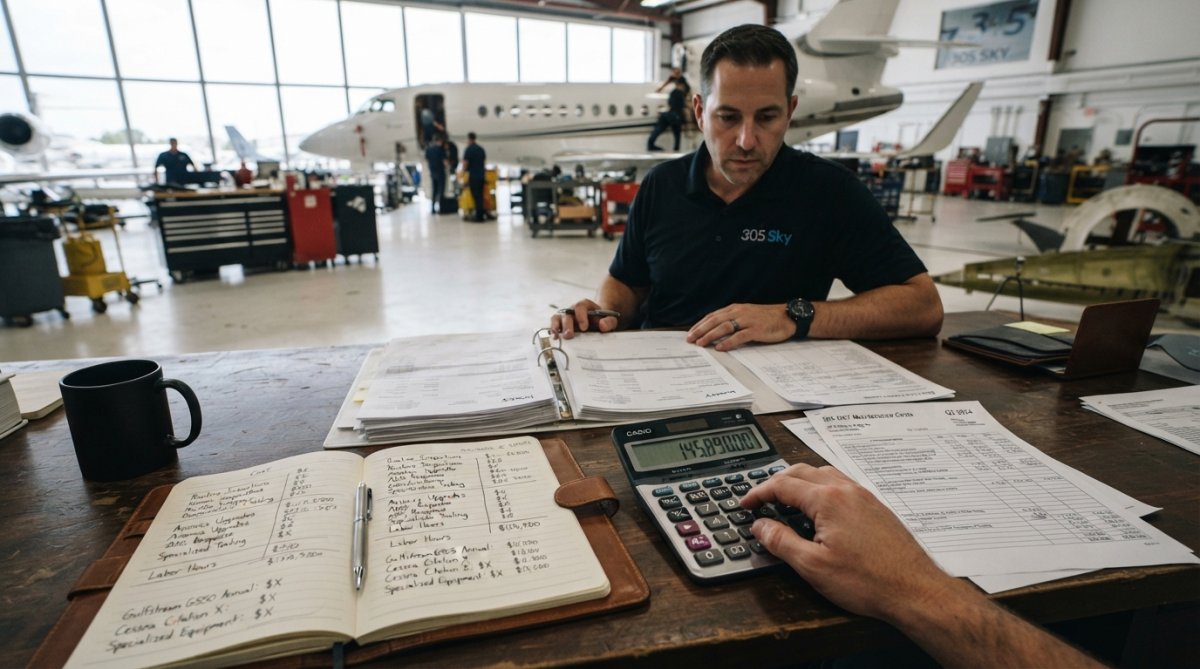
Maintenance costs vary dramatically by aircraft category. The following ranges represent typical annual costs for aircraft in active service (100-200 flight hours per year), including routine inspections, parts, labor, and reserves for major components.
Light Jet Annual Maintenance
Light jets (Cessna Citation M2, Embraer Phenom 100, Learjet 45) typically cost between many thousands to lower six figures annually. These aircraft have simpler systems than larger jets and lower inspection complexity. A light jet's engine typically requires overhaul every 3,500-4,500 hours.
Operators report that light jet maintenance becomes more predictable when using maintenance programs like JSSI or ESP, which spread costs across monthly payments rather than creating surprise bills.
Midsize Jet Annual Maintenance
Midsize jets (Citation XLS, Learjet 60, Hawker 800) fall into a middle ground with significantly higher costs than light jets but less than heavy jets. These aircraft have more complex avionics, larger pressurization systems, and often twin engines with higher operating parameters.
Labor typically represents 40-50% of total expenses, with parts and engine reserves splitting the remainder. Many midsize operators find that preventive maintenance programs reduce their total cost of ownership by 15-20% compared to reactive maintenance.
Heavy Jet Annual Maintenance
Heavy jets (Gulfstream G550, Bombardier Global 7500, Dassault Falcon 8X) represent the premium end of maintenance costs, often reaching six figures annually. Heavy jets have more complex avionics suites, larger pressurization systems, and heavier airframes requiring more extensive inspection.
Heavy jet operators typically budget 5-8% of aircraft value annually for maintenance. A jet worth twenty million dollars might require one to one-point-six million dollars in annual maintenance.
Factors Influencing Private Jet Maintenance Costs
Airframe Age and Use Hours
Older aircraft typically cost 30-50% more to maintain than identical newer aircraft. Seals degrade, electrical systems corrode, and metal fatigue increases crack probability. Flight hours accelerate maintenance intervals; an aircraft flying 500 hours annually approaches component overhauls faster than one flying 100 hours.
However, an aircraft flown consistently and well-maintained may cost less than a newer aircraft that sat idle. Corrosion and seal degradation from inactivity can be as damaging as flight hours. Even without flying, you'll still need annual inspections and time-based airworthiness directives.
OEM Service Bulletins and Airworthiness Directives
Manufacturers issue service bulletins recommending maintenance to improve reliability. Airworthiness directives (ADs) are mandatory FAA requirements addressing safety concerns. A single AD can cost thousands to tens of thousands of dollars. An older aircraft type may have dozens of active ADs.
Monitoring the FAA's AD database for your aircraft type helps you anticipate future maintenance costs.
Scheduled Maintenance: A-D Inspections and Annual Requirements
The FAA requires aircraft to undergo periodic inspections at specified intervals, designated A, B, C, and D checks with increasing complexity and cost.
Understanding A-D Check Intervals
An A-check is the simplest inspection, typically performed annually. It includes visual inspection of major systems, fluid level checks, and functional testing. An A-check usually takes 20-40 hours and costs several thousand dollars.
A B-check occurs every 24 months or every 400-600 flight hours, including lubrication of moving parts and detailed system inspections. A B-check typically requires 40-80 hours of labor.
A C-check happens every 18-24 months or every 1,200-2,000 flight hours, including component removal and detailed system testing. A C-check can require 200-400 hours of labor and often reveals components needing replacement.
A D-check is the most comprehensive inspection, occurring every 4-6 years or every 4,000-6,000 flight hours. It's essentially a complete disassembly and inspection of major systems, often costing more than one hundred thousand dollars for larger aircraft.
Labor Rates and Parts Pricing
Labor rates for aircraft maintenance vary by technician certification level and location. A certified airframe and powerplant (A&P) mechanic might charge eighty to one hundred twenty dollars per hour. Specialized technicians may charge more.
OEM parts are typically more expensive than aftermarket alternatives but carry manufacturer warranty. Aircraft maintenance shops typically mark up parts 15-25% above cost. Labor typically represents 40-60% of total maintenance costs for scheduled inspections, with parts comprising the remainder.
Private Jet Engine Overhaul Cost and Unscheduled Maintenance
Engine overhauls represent the largest single maintenance expense for most aircraft owners.
Engine Overhaul Timing and Expense Planning
Jet engines are overhauled on a time-between-overhaul (TBO) schedule. A typical business jet engine has a TBO of 3,500-6,000 hours. An engine overhaul for a light jet might cost forty thousand to eighty thousand dollars. A midsize jet engine overhaul ranges from eighty thousand to one hundred fifty thousand dollars. A heavy jet engine overhaul can exceed two hundred fifty thousand dollars per engine.
These costs don't include removal and reinstallation labor, which adds another ten to twenty thousand dollars per engine. Many owners use engine maintenance reserves to spread these costs. A reserve of one hundred dollars per flight hour means a light jet flying 150 hours annually accumulates fifteen thousand dollars annually toward future overhauls.
Unscheduled Repairs and Emergency AOG Support
Unscheduled maintenance occurs when a component fails unexpectedly. AOG (aircraft on ground) situations are expensive, with indirect costs from ferry flights, crew accommodations, and charter obligations often exceeding repair costs.
Emergency AOG support is available 24/7 from specialized providers. 305 Sky offers mobile maintenance response with a dedicated van, allowing technicians to reach your aircraft quickly and perform repairs on-site when possible. Unscheduled maintenance typically represents 30-50% of total annual maintenance costs. Operators who invest in preventive maintenance reduce unscheduled events significantly.
Private Jet Fixed vs. Variable Costs Explained
Your total aircraft operating budget includes both fixed costs (independent of flight hours) and variable costs (scaling with use).
Fixed Costs: Hangar, Crew Training, and Warranty
Fixed costs occur whether you fly your aircraft one hour per year or five hundred hours. Hangar costs typically range from three thousand to ten thousand dollars monthly in major metropolitan areas. Crew training and recurrent certification is mandatory, budgeting five thousand to fifteen thousand dollars annually depending on crew size.
Insurance premiums are fixed annual costs. A light jet might cost fifteen thousand to thirty thousand dollars annually. A heavy jet could cost one hundred thousand dollars or more depending on hull value and operational parameters.
Variable Costs: Flight Hours, Spare Parts, and Depreciation
Variable costs scale with how much you fly. A light jet burns 150-200 gallons per hour. A heavy jet burns 300-500 gallons per hour. With jet fuel averaging around five to six dollars per gallon, fuel costs range from one thousand dollars per hour (light jet) to three thousand dollars per hour (heavy jet).
Engine reserves are variable costs tied to flight hours. Most operators budget one hundred to two hundred dollars per flight hour for engine overhaul reserves. Budget one thousand to two thousand dollars per flight hour for total variable maintenance costs, depending on aircraft type and age.
Private Jet Operating Costs and Maintenance Program ROI
Maintenance programs offered by providers like JSSI and ESP bundle maintenance costs into predictable monthly payments, providing ROI by eliminating surprise expenses and reducing unscheduled maintenance.
How Maintenance Programs (JSSI, ESP) Reduce Uncertainty
JSSI (Jet Support Services International) and ESP (Engine Support Program) are the two largest maintenance program providers. A JSSI contract might cost five thousand to fifteen thousand dollars monthly depending on aircraft type and flight hour allowance, covering engine overhauls, landing gear overhauls, and major component replacements.
The ROI of maintenance programs comes from predictability and reduced unscheduled maintenance. Operators know their fixed costs in advance, making budgeting easier. Studies show that operators using maintenance programs experience 20-30% fewer unscheduled maintenance events compared to reactive maintenance.
Part 91 vs. Part 135 Operations: Maintenance Compliance Differences
Part 91 operators are individuals or companies flying their own aircraft for personal or business use. Part 135 operators are air taxi and charter services carrying passengers for compensation.
Part 135 operations require more frequent inspections and detailed maintenance tracking, increasing costs by 30-50%. However, Part 135 operators benefit from economies of scale if they operate multiple aircraft or high flight hours. Most private jet owners operate under Part 91, which offers more flexibility in maintenance scheduling and lower documentation requirements.
Private Jet Inspection Costs: Pre-Purchase and Routine
Inspection costs vary depending on whether you're conducting a pre-purchase inspection (PPI) or routine annual inspections.
Pre-Purchase Inspection (PPI) Cost Breakdown
A pre-purchase inspection is a comprehensive evaluation of an aircraft's condition before purchase. A thorough PPI typically costs five thousand to twenty thousand dollars depending on aircraft type and complexity.
The PPI includes detailed examination of the airframe for corrosion or cracks, engine borescope inspection, avionics functional testing, and review of maintenance records. An inspection that costs ten thousand dollars might reveal fifty thousand dollars in deferred maintenance, saving you from a bad purchase.
At 305 Sky, we conduct comprehensive pre-purchase inspections for buyers throughout South Florida. Our team reviews the complete maintenance history, performs detailed systems testing, and provides a written report with repair recommendations and cost estimates.
Annual Inspection Requirements and Logbook Compliance
Annual inspections are mandatory for all aircraft operating under Part 91. An annual inspection typically costs two thousand to five thousand dollars for a light jet, five thousand to ten thousand dollars for a midsize jet, and ten thousand to twenty thousand dollars for a heavy jet.
The inspection includes examination of all major systems, flight control rigging checks, engine compression testing, and avionics functional verification. Proper logbook maintenance is critical for proving your aircraft is airworthy. Every inspection, repair, and maintenance action must be documented in the aircraft logbook.
| Inspection Type | Interval | Typical Cost | Duration |
|---|---|---|---|
| Annual Inspection | 12 months | $2,000-$20,000 | 20-400 hours |
| A-Check | 12 months or 400 hrs | $3,000-$8,000 | 20-40 hours |
| B-Check | 24 months or 600 hrs | $5,000-$12,000 | 40-80 hours |
| C-Check | 18-24 months or 2,000 hrs | $15,000-$40,000 | 200-400 hours |
| D-Check | 4-6 years or 6,000 hrs | $100,000-$300,000+ | 1,000+ hours |
| Pre-Purchase Inspection | Before purchase | $5,000-$20,000 | 40-80 hours |
Owning a private jet requires understanding the full scope of maintenance costs and planning accordingly. Preventive maintenance and maintenance programs provide better ROI than reactive repairs. Aircraft that receive consistent, documented care retain value better and experience fewer emergency situations.
305 Sky helps aircraft owners throughout South Florida manage maintenance strategically. Our team provides annual inspections, pre-purchase inspections, AOG emergency support, and comprehensive maintenance planning. With 55 years of combined aviation experience and four strategically located facilities, we deliver transparent pricing and expert guidance on optimizing your maintenance budget. Get a quote from 305 Sky today and discover how strategic maintenance planning reduces your total cost of ownership.
Frequently Asked Questions
How much does it cost to maintain a private jet annually?
Annual maintenance costs vary significantly by aircraft type and utilization. Light jets typically require lower annual maintenance investment than midsize or heavy jets. Costs depend on flight hours, airframe age, scheduled inspection intervals (A-D checks), and whether you use a maintenance program like JSSI or ESP. For accurate budgeting, consult with your maintenance provider about your specific aircraft model and operational profile.
What's the difference between fixed and variable private jet operating costs?
Fixed costs remain constant regardless of flight hours and include hangar fees, crew training, and insurance. Variable costs scale with usage and include fuel, spare parts, labor for maintenance, and depreciation. Understanding this distinction helps owners budget effectively. Many operators use maintenance programs to convert unpredictable variable costs into predictable fixed monthly payments.
What is included in a pre-purchase inspection for a private jet?
A comprehensive pre-purchase inspection (PPI) examines the airframe, engines, avionics, interior condition, maintenance logbooks, and compliance with airworthiness directives. The scope and cost depend on aircraft age, type, and condition. A thorough PPI identifies deferred maintenance and unexpected repair needs before purchase, potentially saving significant money and revealing age-based cost escalation patterns you'll face as the owner.
How do Part 91 and Part 135 operations affect maintenance requirements?
Part 91 (private owner) operations have baseline FAA maintenance requirements, while Part 135 (charter) operations require more frequent inspections and stricter maintenance tracking. Part 135 operators must maintain detailed logbooks and comply with additional service bulletins. This regulatory difference means Part 135 aircraft typically incur higher annual maintenance costs, though both require adherence to A-D inspection schedules and airworthiness directives.
Why do engine overhauls represent such a large maintenance expense?
Engine overhauls are capital-intensive events occurring every 3,500-5,500 flight hours depending on engine type. A complete overhaul involves disassembly, inspection, replacement of worn components, and reassembly to manufacturer specifications. Costs depend on engine model and OEM parts pricing. Many owners use engine maintenance programs (ESP) to spread overhaul costs across operating years, converting this lump-sum capital expenditure into manageable monthly reserves.
This article was written using GrandRanker